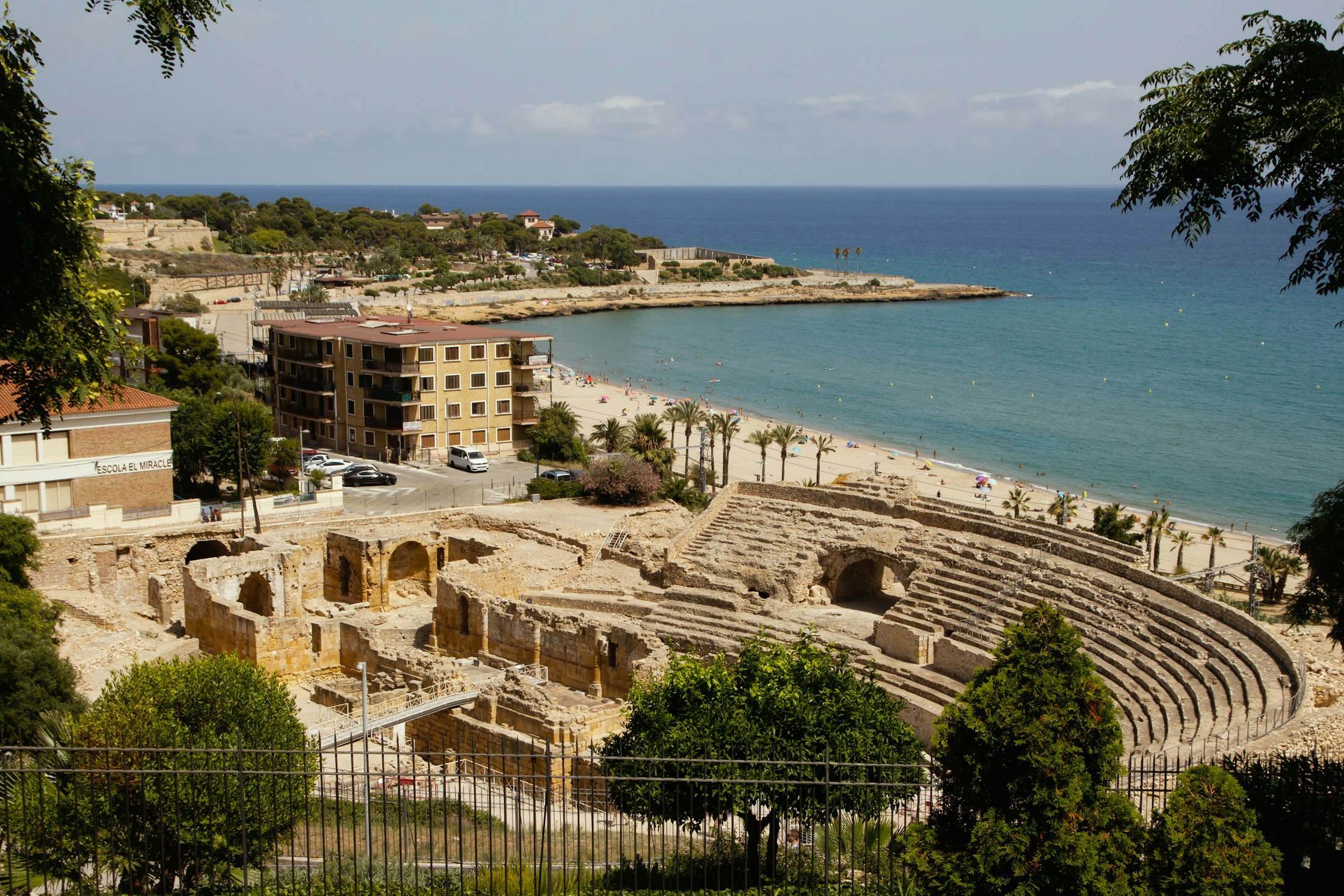
Wide golden beaches, shallow waters and Roman Tarragona in the background. The Costa Daurada is the sunny, family-friendly coast of southern Catalonia, with good transport links, a mild climate and prices that are usually more accessible than around Barcelona or on the Costa Brava.
The Costa Daurada is a practical, family-friendly coast: less spectacular than the Costa Brava, but easier for everyday life and usually gentler on the budget. It particularly suits people who:
If, however, you dream of wild, rocky coves and a boutique atmosphere, the Costa Brava is the better choice.
The Costa Daurada, the “golden coast”, is the coastal part of the province of Tarragona, from around Cunit in the north to the Ebro Delta in the south. Its hallmark is long beaches of fine golden sand and a calm, shallow sea, ideal for children.
The region has several distinct zones. The north – Cunit, Calafell, Torredembarra – consists of towns with family housing, from which some residents commute to work in Barcelona. The centre is Tarragona, the former Roman Tarraco, whose monuments (the seaside amphitheatre, the walls and the forum) are UNESCO World Heritage, together with the triangle of Salou, Cambrils and Reus and the PortAventura World theme park. The south, from L’Ametlla de Mar to the Ebro Delta, is quieter and more natural: small coves, rice fields, lagoons and birdlife.
Inland begin the vineyards of Priorat and Montsant, olive groves and towns famous for their calçotadas, a springtime feast of grilled spring onions. Reus, Gaudí’s home town, is the commercial and service centre of the area.
The pace of life is calmer than in Barcelona and more local than on the Costa Brava. In summer the resorts fill up with visitors from Spain, France and the rest of Europe, while out of season normal life carries on in Tarragona, Reus and Cambrils, even as some holiday developments in Salou and Miami Platja become noticeably empty.
The climate is typically Mediterranean: sunny, with dry summers and mild winters. According to AEMET normals (1981–2010) for the Reus Aeropuerto station, the average January temperature is around 9°C (average maximum around 14°C) and the average August temperature around 24.6°C (average maximum around 29.4°C). Annual rainfall is around 500 mm, peaking in September and October.
The beach season runs from June to September, and spring and autumn are very pleasant for living and walking. Winters on the coast are mild but cooler than in the south of Spain, so heating is useful at home, especially in older buildings from the 1970s and 1980s. Inland, in Priorat, the nights are noticeably colder.
Autumn downpours can be violent, and around the Ebro Delta there is also strong wind and coastal erosion. Larger towns work best for permanent living; typical holiday developments can be empty and quiet in winter.
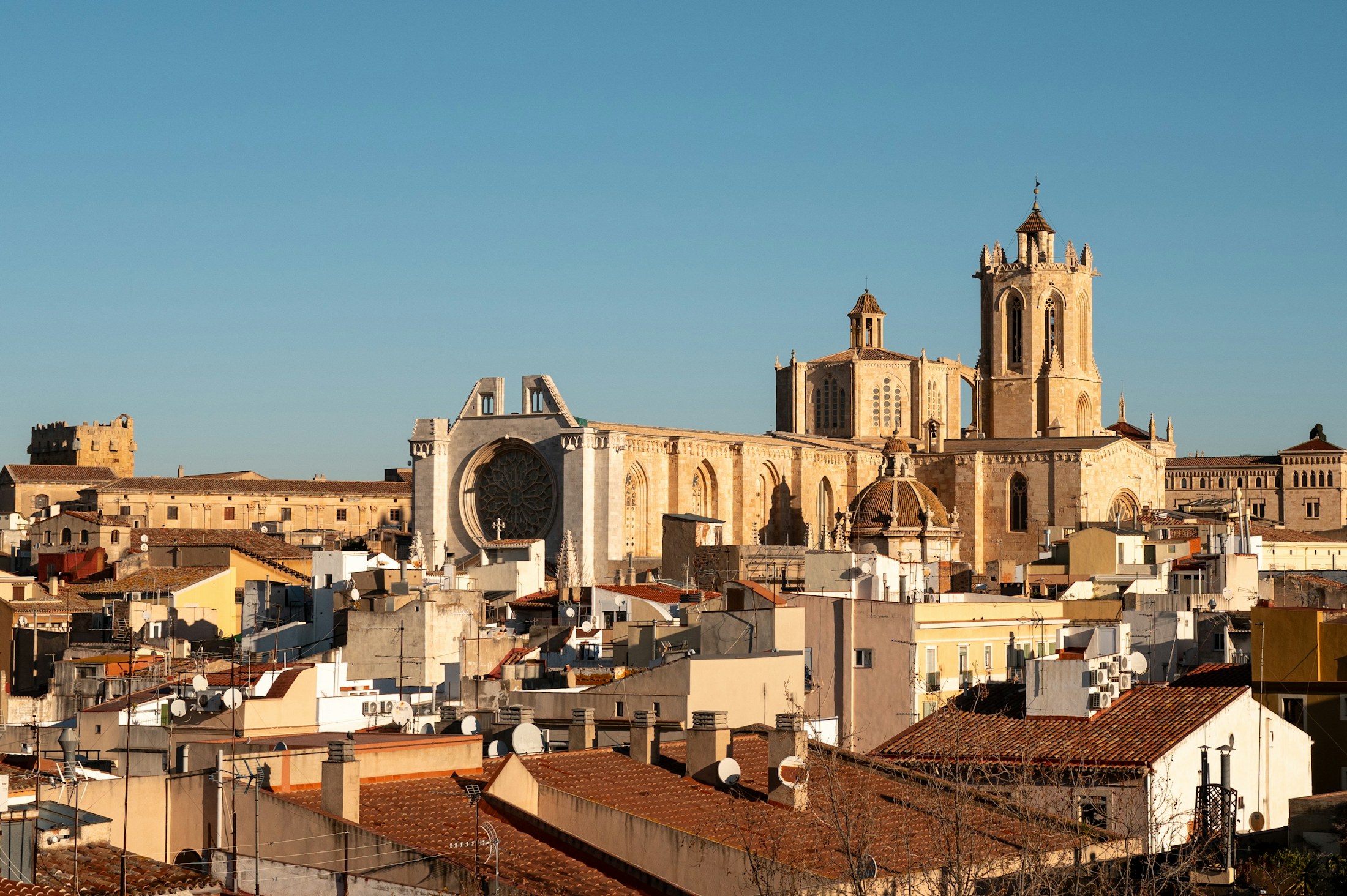
A city with full infrastructure, a university, hospitals and a historic centre by the sea. The best place for year-round living: apartments in the old town (Part Alta), on the Rambla Nova or with sea views. Bear in mind the port and industrial zone south of the city: not every neighbourhood is equally pleasant.
A former fishing port with excellent food, a long promenade and a calmer character than neighbouring Salou. It is lively all year round and popular with families and those who want to stay longer than the season. Plenty of terraced houses and apartments with gardens.
The largest resort in the region, with wide beaches, a broad range of services and PortAventura World close by. Holiday apartments predominate, often with a pool. In summer it is busy and loud, out of season much quieter. The Cap Salou area, with its small coves and villas, has a completely different, calmer character than the centre.
A medieval hilltop village and a fishermen’s quarter by the sea, with Tamarit Castle on the headland. Intimate, well kept and full of atmosphere: for those seeking character rather than a resort. Supply is small and prices are higher than in neighbouring towns.
Towns with long beaches, family housing and the shortest journey to Barcelona in the whole region. A practical choice for a second home or permanent living for those who work in Barcelona but want more space.
Developments of houses and apartments on the hillsides above small coves, south of Cambrils. Usually more affordable, very quiet out of season and clearly holiday-oriented in character.
Fishing towns with dozens of small coves, a coastal path and the Ebro Delta close by. An intimate alternative for those who love nature, kayaking, cycling and fresh fish from the harbour, with a longer journey to the airports.
Limitations worth knowing about:
Year-round living is best planned in Tarragona, Reus, Cambrils or the towns in the north of the region, which have a life of their own in winter too. That is where you will find schools, health centres, shops and public transport.
A second home is what Salou, Cap Salou, Miami Platja and L’Ametlla de Mar do best. In summer everything is close at hand, and in spring and autumn you can enjoy the peace; you just have to accept that some restaurants and shops close for the winter.
As an investment the Costa Daurada is clearly seasonal, with demand concentrated in summer and around attractions such as PortAventura. At the same time, since November 2023 Catalan regulations (Decret llei 3/2023) have restricted the issuing of new tourist-rental licences in 262 municipalities. Before buying, you need to check the licence status of the specific property and, for a flat in an apartment block, the rules of the owners’ association. We do not provide profit forecasts.
The character of the market. The market is varied: alongside buyers from Catalonia and the rest of Spain, the French and other Europeans looking for a holiday home make up a large group. Buildings from the second half of the 20th century predominate, so a building’s condition and energy efficiency have a big impact on the real cost of buying. Properties with a direct sea view are in limited supply.
This information is general in nature and does not constitute legal or tax advice. Before buying, it is advisable to consult an independent lawyer and tax adviser.
The architecture of the Costa Daurada combines the Roman and medieval stone walls of Tarragona, fishermen’s houses with wooden shutters and the modernista “wine cathedrals”: cooperative wineries from the early 20th century, built by, among others, Gaudí’s pupil Cèsar Martinell. Inland, stone masies surrounded by vineyards and olive groves predominate, while Reus has modernista town houses.
Inside, a warm, natural palette works well: sand, terracotta, olive green and off-white, raw wood, stone and linen. In a typical 1980s apartment, the biggest difference comes from replacing the floors with light, uniform tiles or microcement, opening up the kitchen and shading the terrace well. Interiors inspired by vineyards and olive groves create a calm, timeless atmosphere, ideal for a home you want to keep coming back to.
The Costa Daurada is one of the most family-friendly regions of Catalonia, with wide beaches, a gentle sea and the culture of Tarragona in the background. It works well as a holiday home, and in Tarragona, Reus, Cambrils and the north of the region also as a place to live all year round. If you are looking for rocky coves and a boutique feel, consider the Costa Brava; for city life, Barcelona and its surroundings; and for an even quieter, more Spanish coast, the Costa Azahar.
Sources: AEMET – Reus Aeropuerto climate normals (1981–2010) · Aena – Reus Airport · UNESCO – Tarraco · Generalitat de Catalunya – Decret llei 3/2023 · BOE – Real Decreto 1312/2024 (short-term rental register) · BOE – Ley 22/1988 de Costas. Information as of September 2026.
Tell me about your plans. I will help you choose the right location and find a property that suits your lifestyle.