The tranquil coast of the province of Castellón, named after the orange blossom that fills the air with its scent in spring. The Costa Azahar means wide beaches, medieval Peñíscola and authentic Spanish towns, without the crowds of the better-known resorts.
The Costa Azahar is one of the least “international” coasts in Spain: in summer, holidaymakers here are mainly Spaniards from Valencia, Aragon and Madrid. It is a good address for people who:
It is less suited to those looking for a large international community, a lively nightlife or a very wide choice of flights.
The Costa Azahar covers the coast of the province of Castellón, from Vinaròs in the north to around Almenara in the south. The name comes from the orange blossom (azahar): inland stretch citrus groves and mountains, while on the coast wide beaches alternate with cliffs and small coves.
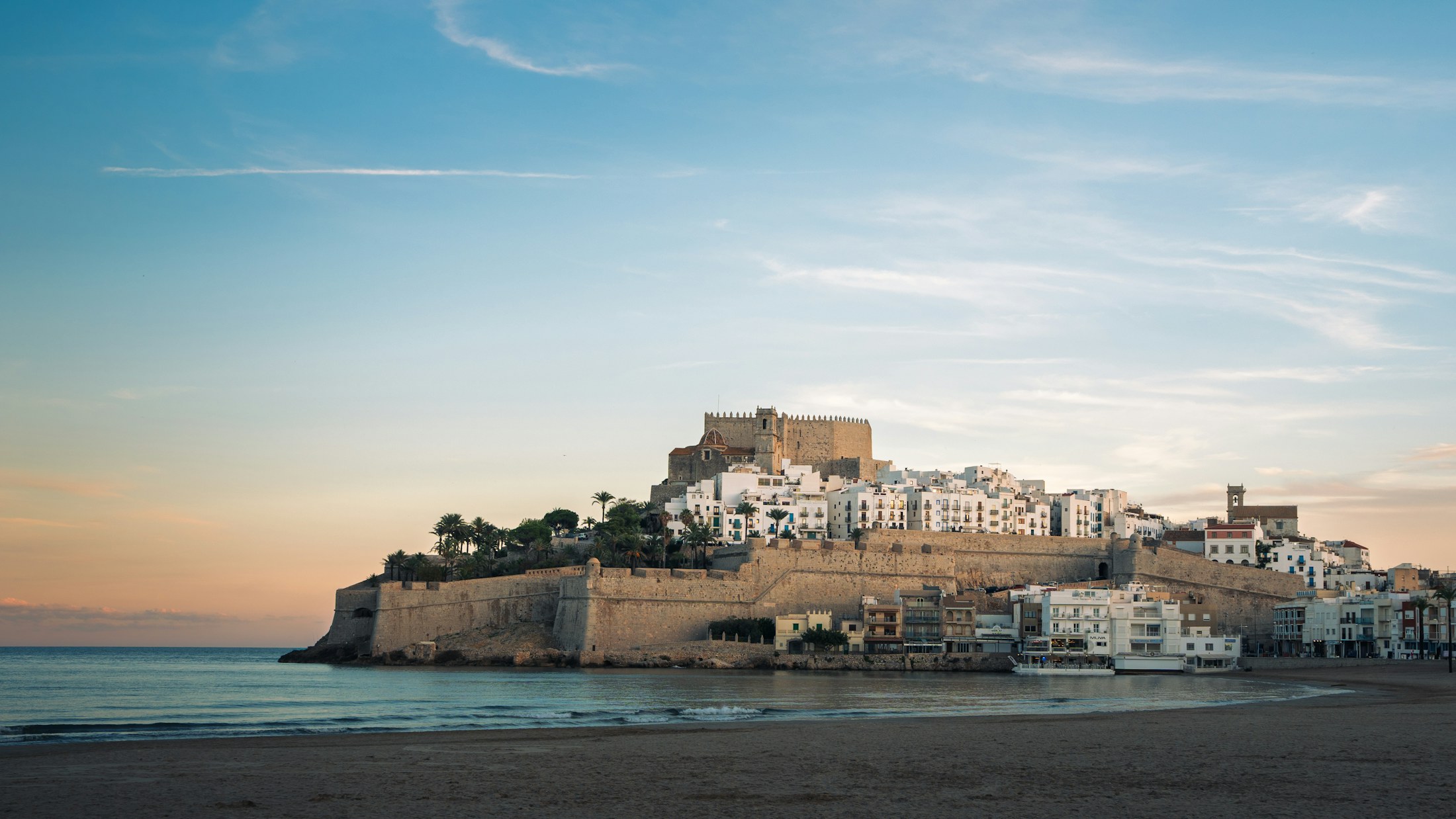
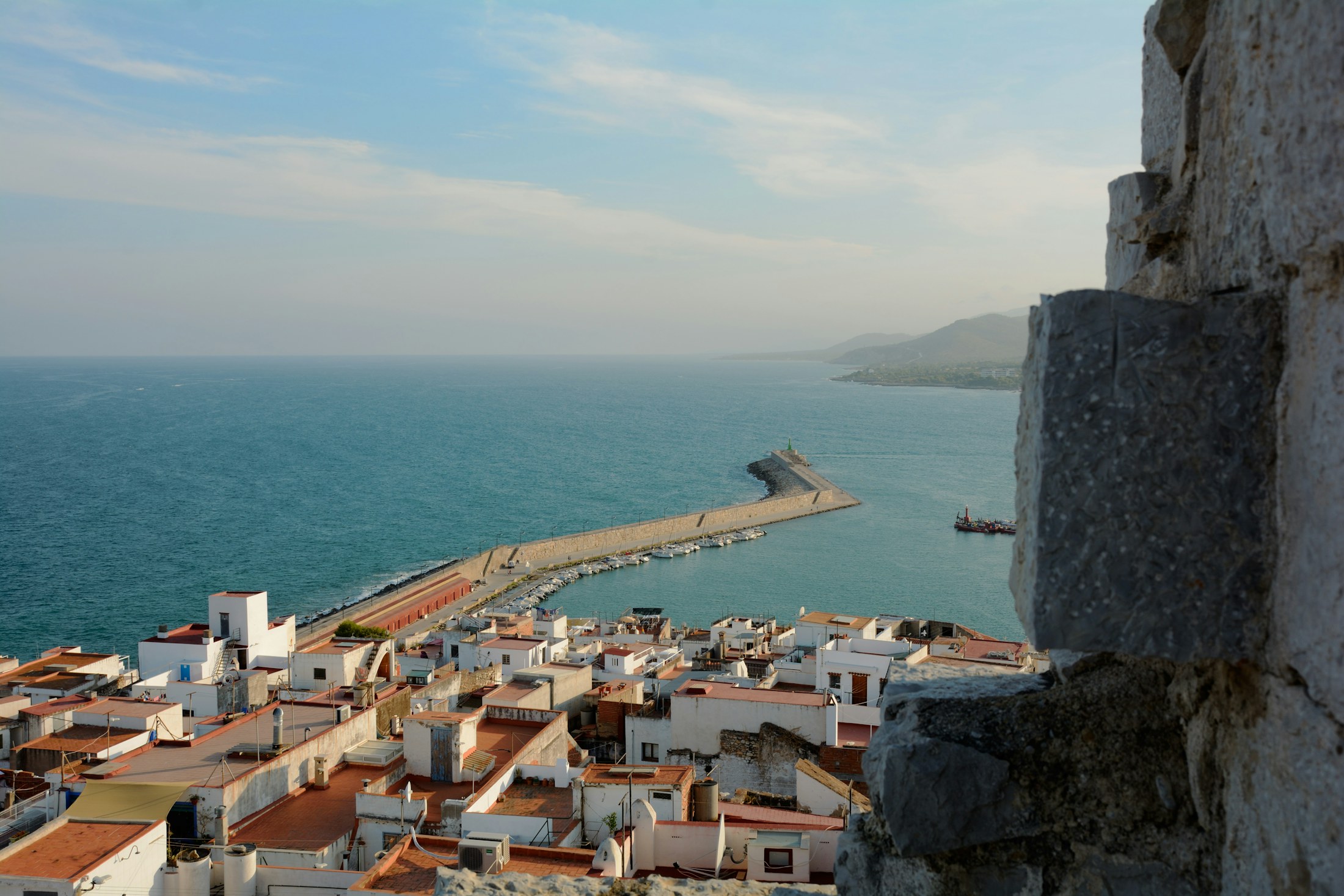
The region has several faces. The north, with Vinaròs and Benicarló, has genuine port towns with fish markets and a food industry. Peñíscola, a walled old town on a rocky headland with the castle of Pope Benedict XIII (Papa Luna), is the region’s showpiece. Alcossebre and Torrenostra border the wild coast of the Serra d’Irta park, where there is no development for more than ten kilometres. Benicàssim is known for the elegant late 19th- and early 20th-century villas along its promenade, and Oropesa del Mar for its small coves and watchtower. South of Castellón the coast becomes flat and agricultural, with towns such as Burriana and Moncofa.
The lifestyle is calm and family-oriented. In summer the towns come alive with fiestas, concerts and the FIB music festival in Benicàssim, while for the rest of the year ordinary local life carries on. Castellón de la Plana, the provincial capital, provides hospitals, a university and full infrastructure. Both Spanish and Valencian are spoken in the region.
According to AEMET normals (1981–2010) for the Castellón – Almassora station, the average January temperature is around 10.6°C (average maximum around 15.3°C) and the average August temperature around 25.6°C (average maximum around 30.3°C). Annual sunshine is around 2,755 hours and annual rainfall around 467 mm, peaking in autumn.
Winters are mild and sunny, although evenings can be cool and damp, so heating (such as a heat pump) is necessary, especially in apartments built with only the summer in mind. Summers are warm but usually without the extreme heat of the south. Spring and autumn are the best times for long stays.
In autumn there can be intense downpours (known as DANA), typical of the Mediterranean coast, and it is worth taking them into account when choosing a location. Inland, in the Maestrazgo mountains, winters are genuinely cold. For permanent living, cities and larger towns are the most convenient.
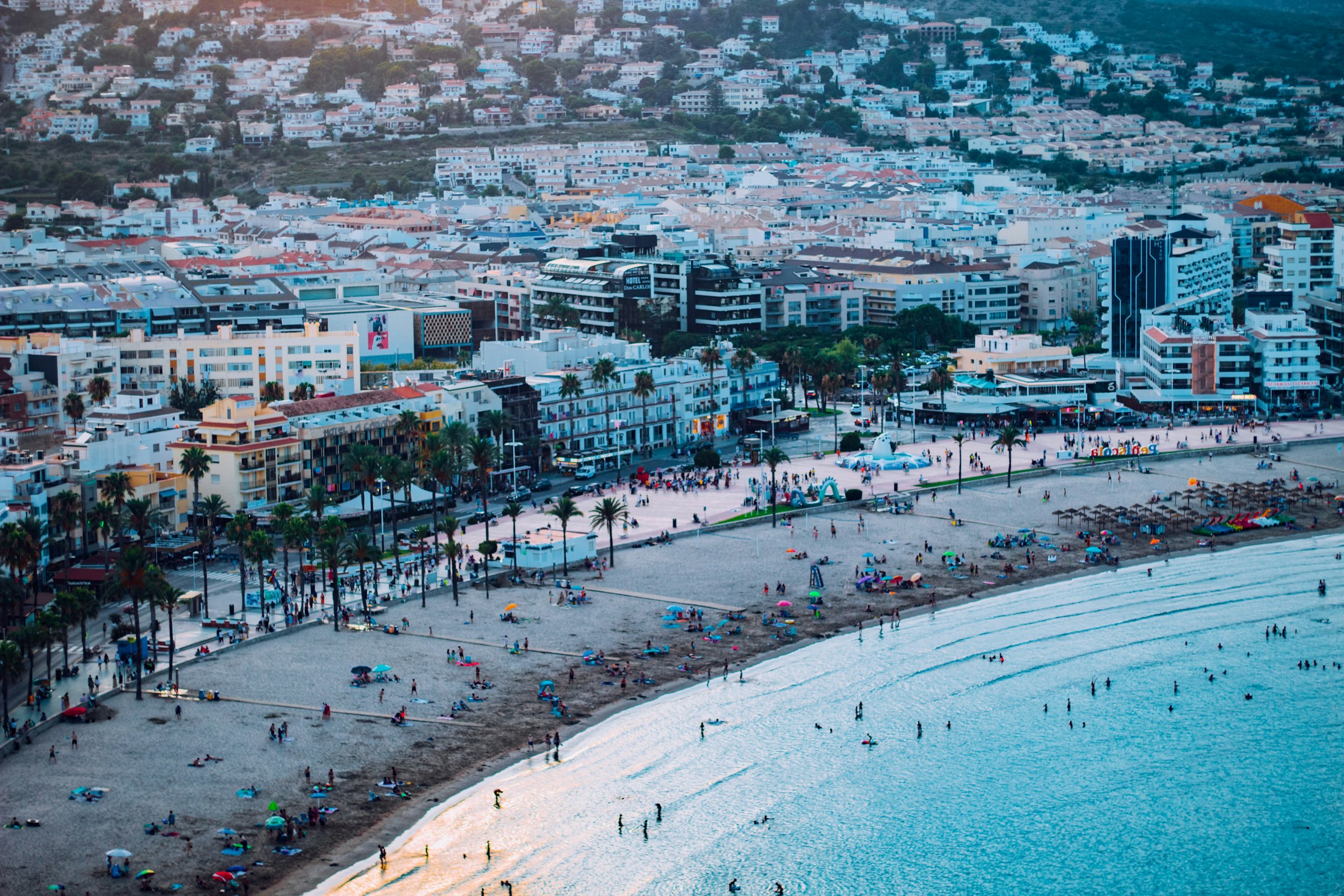
An old town on a headland, a long beach and the Papa Luna castle. The best-known town in the region: popular in summer, yet still intimate. Apartments with views of the castle and the sea are its greatest asset; on the hills behind the town there are estates of houses with gardens. Out of season life is quiet, while in neighbouring Benicarló everything is open all year round.
An elegant resort with historic villas, a wide beach and the Desert de les Palmes park in the background. A few minutes from Castellón, with good infrastructure, it also works well for year-round living. The historic villas rarely come onto the market; you are more likely to find apartments from the 1970s–2000s.
A quiet town with coves and beaches on the edge of the Serra d’Irta park. For those seeking nature, peace and houses with sea views. The community is mixed: alongside Spaniards, quite a few people from northern Europe live here.
A small town with a watchtower, coves and a large number of holiday apartments, including in the extensive Marina d’Or complex. Family-friendly and affordable, but very seasonal: in winter some developments are almost empty.
Genuine, year-round port towns with markets, restaurants, schools and beaches. A good alternative to the resorts if you want to live among the local community and have everything on your doorstep 12 months a year.
The port district of the provincial capital, with beaches, a marina and urban infrastructure. An option for those who want to live by the sea but in a city, with the university, hospital and railway station a few minutes away.
Limitations worth knowing about:
Year-round living is best planned in Castellón, Benicàssim, Vinaròs or Benicarló, where you will find schools, health centres, shops and transport. Peñíscola and Alcossebre are also lively in winter, but at a slower, very calm pace.
A second home is the natural role of this coast: an apartment with a sea view in Peñíscola, a house in Alcossebre or a flat in Oropesa to come to for the summer, holidays and long weekends. The mild spring and autumn are ideal for off-season stays.
As an investment the region is seasonal, with demand concentrated in summer, mainly among domestic tourists. Since August 2024 the Valencian Community has had stricter rules on tourist accommodation (Decreto-ley 9/2024), and municipalities can introduce their own restrictions. In communal buildings, since April 2025 a new holiday let requires the consent of three-fifths of the owners (Ley Orgánica 1/2025). Before buying with letting in mind, check the rules in the specific town. We do not provide profit forecasts.
The character of the market. This is a largely domestic market: most buyers are Spaniards looking for a summer flat, and the share of foreign buyers is smaller than on the Costa Blanca. Holiday apartments from recent decades dominate supply, while properties with character – historic villas, houses in old towns, well-located homes with a view – come up less often. The pace of sales depends heavily on the season.
This information is general in nature and does not constitute legal or tax advice. Before buying, it is advisable to consult an independent lawyer and tax adviser.
Castellón is Spain’s ceramics heartland: it is here, around l’Alcora and Vila-real, that a large share of the tiles made in Spain are produced. Traditional architecture includes whitewashed fishermen’s houses, stone masies among the citrus groves and the elegant late 19th- and early 20th-century villas of Benicàssim, with turrets, verandas and gardens full of palm trees.
Ceramics look beautiful in interiors – hand-painted tiles as an accent in the kitchen or bathroom – combined with light walls, wood and greenery. Orange and terracotta accents echo the region’s groves. In a typical holiday apartment, light floors, built-in storage and a well-shaded terrace that becomes a second living room make a big difference.
The Costa Azahar is a calm, authentic and affordable part of the east coast. It works best as a family holiday home or a place for long stays for those who value the local atmosphere more than international company, and for year-round living in Castellón, Benicàssim, Vinaròs or Benicarló. If you are looking for a big city, consider Valencia; for a more international feel and a wider range of amenities, the Costa Blanca.
Sources: AEMET – Castellón – Almassora climate normals (1981–2010) · Aena – Valencia Airport · Generalitat Valenciana – Decreto-ley 9/2024 · BOE – Ley Orgánica 1/2025 (amendment to the Ley de Propiedad Horizontal) · BOE – Real Decreto 1312/2024 (short-term rental register) · BOE – Ley 22/1988 de Costas. Information as of September 2026.
Tell me about your plans. I will help you choose the right location and find a property that suits your lifestyle.