Spain’s third-largest city and at the same time one of the most liveable: with a beach within the city limits, a green park in the old riverbed and a mild climate all year round. Valencia is the choice for those who want city life at a Mediterranean pace.
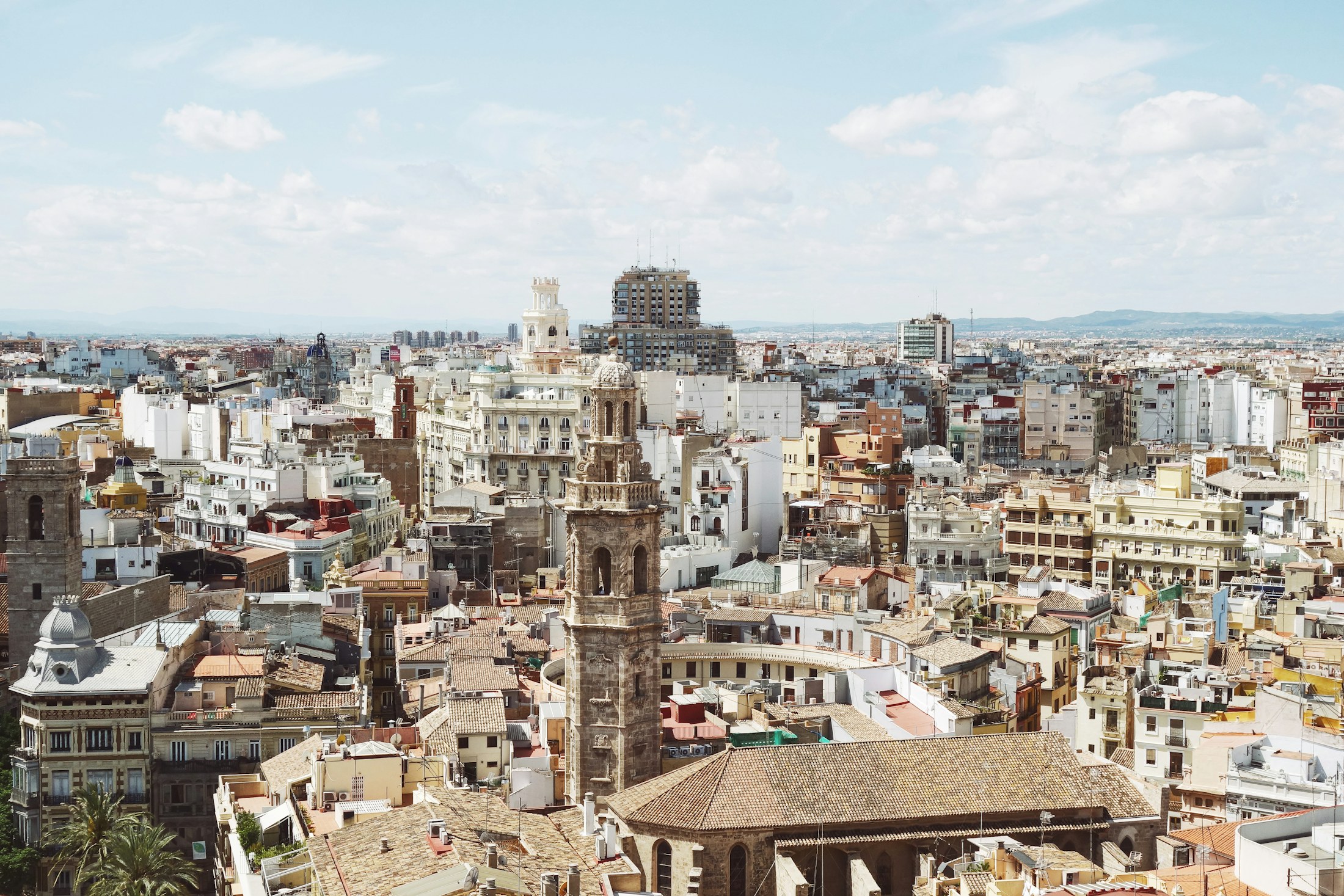
Valencia is a city for those who want to settle in Spain – with work, school and everyday life – but at a calmer pace than in Barcelona or Madrid. It is particularly suitable if:
It is less suited to those looking for rocky coves or cliff-top terrace views, or planning holiday lets in the centre: these options are limited here.
Valencia, Spain’s third-largest city, combines a historic centre – Ciutat Vella with the cathedral, the UNESCO-listed Silk Exchange (Lonja) and the Mercado Central – with the modern architecture of the City of Arts and Sciences. Running through the city is the Jardín del Turia, a park several kilometres long in the old riverbed that links the neighbourhoods and is a favourite place for walking, running and cycling.
By the sea lie the Malvarrosa and Patacona beaches, and to the south the Albufera Natural Park, with its lagoon, rice fields and the village of El Palmar, where paella was born. Around the city stretches the huerta, traditional farmland with irrigation channels where, among other things, tiger nuts for horchata are harvested. In the north-western suburbs – L’Eliana, Bétera, Godella and Rocafort – houses with gardens predominate, much valued by families.
Life is lived outdoors: a morning coffee in the square, lunch in a horchatería, evenings in the Ruzafa or El Carmen neighbourhoods. In March the city spends several days celebrating the Fallas, with fireworks, music and the burning of huge figures, which is both an attraction and a test of patience for residents of the centre.
Valencia is bilingual (Spanish and Valencian), and its international community is growing fast, which makes it easier for newcomers from abroad to settle in.
According to AEMET normals (1981–2010) for the Valencia station, the average January temperature is around 11.8°C (average maximum around 16.4°C) and the average August temperature around 26.1°C (average maximum around 30.2°C). Annual sunshine is around 2,696 hours.
Winters are mild and sunny – on most days you can sit on the terrace at lunchtime – although the humidity from the sea means an unheated flat can feel chilly. Summers are hot and humid, and nights in July and August stay warm; air conditioning is standard in practice.
In autumn there can be violent downpours (DANA). The one in October 2024 caused catastrophic flooding, particularly in the municipalities south of the city, and showed how important it is to check a property’s location on flood-risk maps. Otherwise, the climate is well suited to permanent living, and the city does not change its rhythm after the season.
The historic centre and Valencia’s elegant Eixample: apartment buildings with balconies, high ceilings, and shops and restaurants within walking distance. For those who want to live in the heart of the city and do not mind tourists and bustle, especially during the Fallas.
A creative, lively neighbourhood with cafés, galleries and a market. Great for those looking for an urban vibe; it can be noisy in the evenings and at weekends, and prices have risen noticeably along with its popularity.
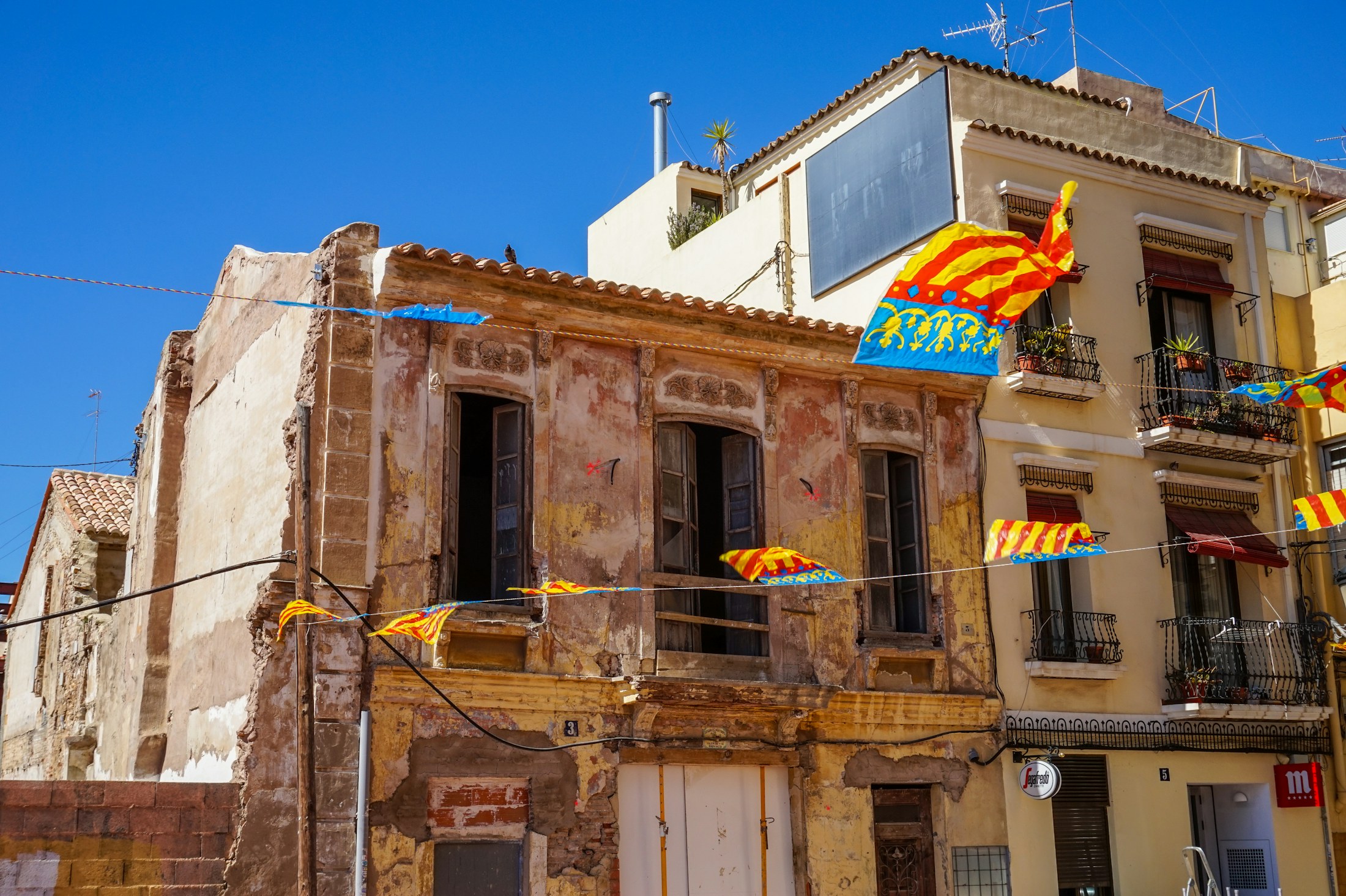
A former fishing quarter with colourful, tiled houses by the beach, and the newer buildings of Patacona (Alboraia). For those who want to live by the sea, within or just beyond the city limits. Cabanyal is in transition: alongside renovated houses there are still streets in need of regeneration.
Newer districts in the north of the city, with apartment blocks featuring pools, parking and green space, close to the Turia park. A practical choice for families who want a modern flat in the city.
Green suburbs with villas, gardens, international schools and a metro link to the centre. The choice of families who need space, at the cost of a daily commute and relying on a car.
Seaside towns north of Valencia, with beaches, housing estates and a commuter train to the centre. Quieter and usually more affordable than the city.
Seaside towns south of Valencia with long beaches and plenty of apartments. Gandia has its own historic centre and is lively all year round, while Cullera is more of a holiday town. Good for a second home, with easy access to the city.
Limitations worth knowing about:
Year-round living is Valencia’s greatest strength: it is one of the best cities in Spain to settle in permanently. Families most often choose the suburbs or Campanar, while those without children prefer the centre, Ruzafa or the area near the beach.
A second home in the city itself makes sense for those who come often and enjoy city life. A classic holiday apartment by the beach is easier to find in Gandia, Cullera or Puçol.
As an investment the city has steady long-term rental demand from students, working professionals and new residents. Holiday lets, on the other hand, are increasingly tightly regulated: stricter regional rules have applied since August 2024 (Decreto-ley 9/2024), the city itself has introduced its own restrictions on new tourist flats, and since April 2025 communal buildings require the consent of three-fifths of the owners (Ley Orgánica 1/2025). We do not provide profit forecasts.
The character of the market. Valencia is primarily a residential market rather than a holiday one. Interest from foreign buyers has risen noticeably in recent years, and good flats in popular neighbourhoods sell quickly. Flats in communal buildings predominate; houses with gardens are the preserve of the suburbs.
This information is general in nature and does not constitute legal or tax advice. Before buying, it is advisable to consult an independent lawyer and tax adviser.
Valencia has a distinctive modernisme: the Mercado Central, the Mercado de Colón and the Estación del Norte are adorned with ceramics, mosaics and orange motifs. Period apartment buildings feature high ceilings, timber beams, hand-painted tiles (azulejos) and hydraulic floors; Cabanyal has façades clad in colourful ceramics; and the surrounding huerta has traditional alquerías and barracas with steep roofs.
Inside, a light base, natural wood and ceramics as an accent work well, together with plants and textiles in shades of sand and terracotta. Preserving the original tiles and beams gives a flat a character you cannot buy in a new building. Given the hot summers, shutters, light curtains and materials that do not heat up in the sun are also important.
Valencia is one of the best places in Spain to live all year round, with the beach, green space, culture and excellent transport links. It is a city for those planning their everyday life here, not just holidays, and who are prepared to check a location carefully for flood risk. If you are looking for a resort and quiet coves, consider the Costa Blanca or the Costa Azahar.
Sources: AEMET – Valencia climate normals (1981–2010) · Aena – Valencia Airport · UNESCO – La Lonja de la Seda · Generalitat Valenciana – Decreto-ley 9/2024 · BOE – Ley Orgánica 1/2025 (amendment to the Ley de Propiedad Horizontal) · MITECO – SNCZI flood-risk maps. Information as of September 2026.
Tell me about your plans. I will help you choose the right location and find a property that suits your lifestyle.