One of the sunniest coasts in Europe and a favourite destination for people from all over the continent. The Costa Blanca combines a green, mountainous north with Xàbia and Altea and a flatter, more affordable south around Alicante: two different lifestyles in one region.
The Costa Blanca is one of the most versatile coasts in Spain, with very different towns and a wide range of budgets. It is most often chosen by people who:
Those looking for an “undiscovered”, purely Spanish atmosphere may be disappointed: in many towns foreigners make up a large share of the residents.
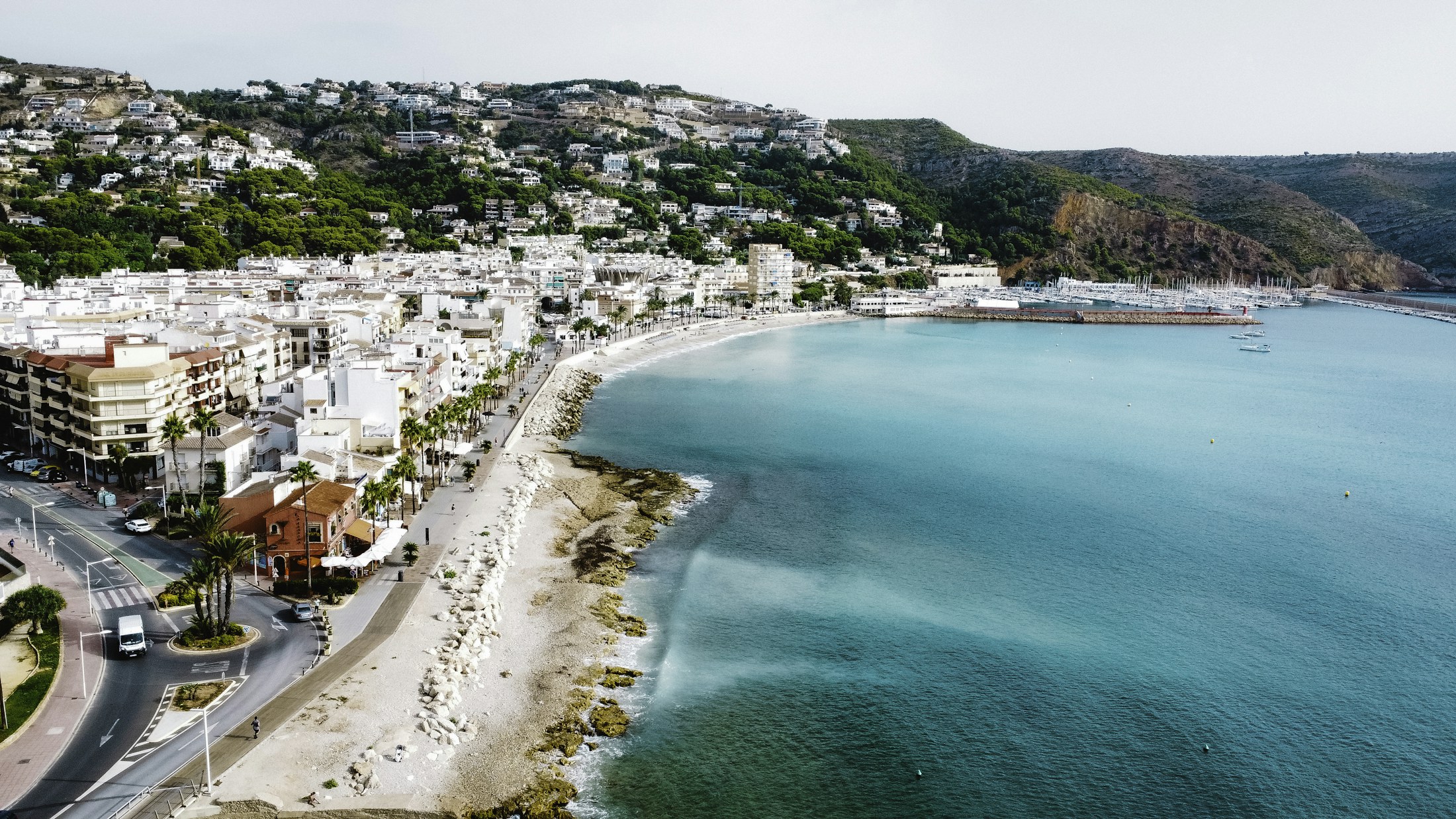
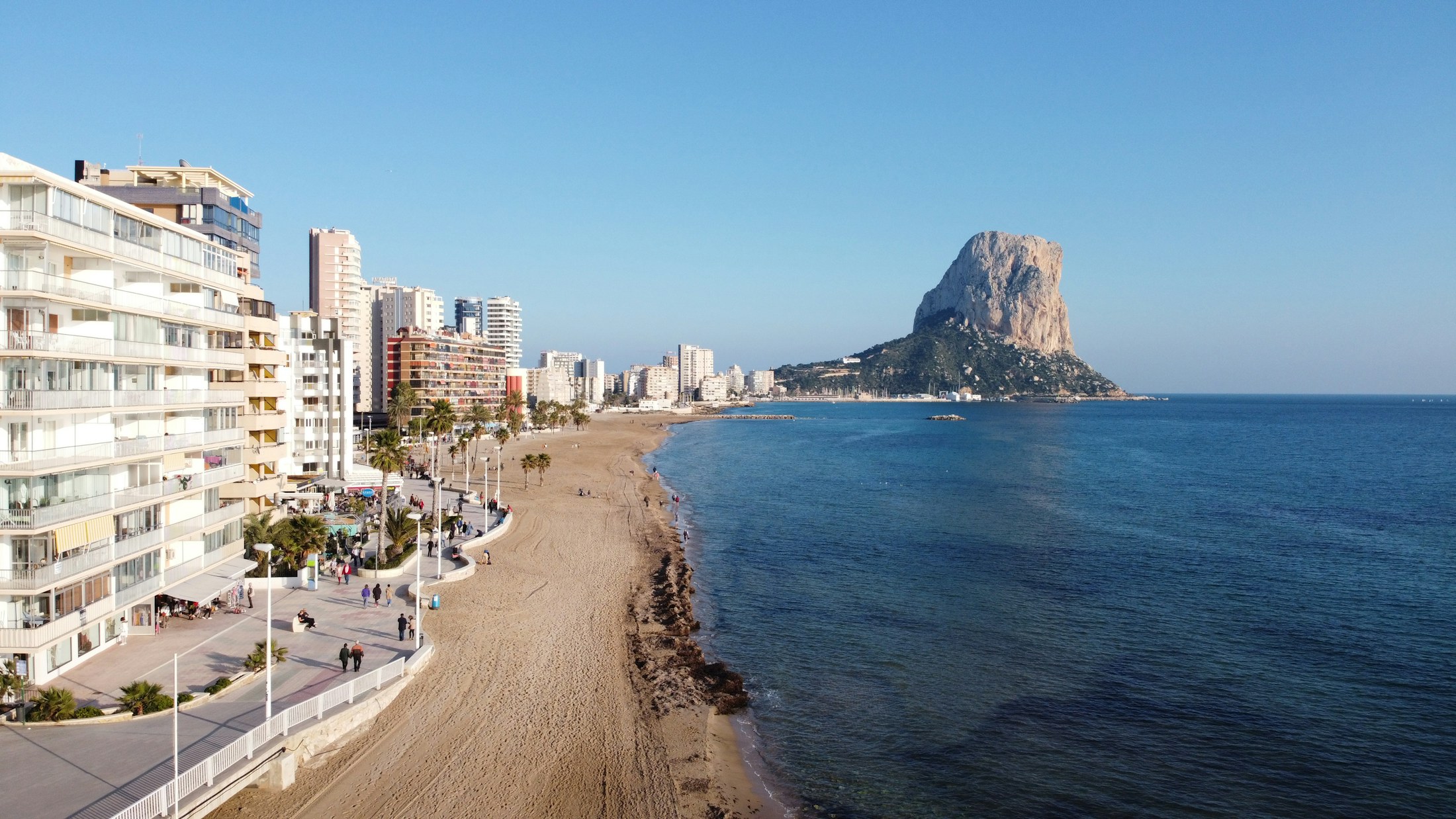
The Costa Blanca is the coast of the province of Alicante. The northern part – the Marina Alta and Marina Baixa – has mountains running down to the sea, the Montgó massif, coves and cliffs: Dénia, Xàbia, Moraira, Benissa, Calp with its distinctive Peñón de Ifach rock, and artistic Altea with its white old town and blue church dome. Inland lie valleys with vineyards, almond orchards and quiet villages such as Jalón and Orba.
The middle of the coast is Benidorm, a city of high-rises and mass tourism that is worth knowing if only as a point of reference, together with neighbouring Finestrat and La Nucía. The south, around Alicante, Santa Pola, Torrevieja and Orihuela Costa, is flat, with long beaches, salt lagoons and a large supply of developments from recent decades. Alicante itself is a lively city with Santa Bárbara Castle, the Explanada promenade, a university and full infrastructure.
Life here is international and relaxed: terraces, golf, sailing, mountain hiking and a weekly market in every town. The north has a more boutique, green character, the south a practical and affordable one. Many towns are home to large communities from the UK, Germany, the Netherlands, Scandinavia and Central Europe, which makes settling in easier but also shapes the local atmosphere.
According to AEMET normals (1981–2010) for the Alicante-Elche Aeropuerto station, the average January temperature is around 11.6°C (average maximum around 16.7°C) and the average August temperature around 26.1°C (average maximum around 30.7°C). Annual sunshine is around 2,953 hours and annual rainfall around 277 mm.
This is one of the driest and sunniest climates in Europe. Winters are mild and summers hot, although in the north they are tempered by sea breezes and the mountains, which also hold back some of the clouds, making the north greener and slightly more humid than the south. The most pleasant months for living are October to June.
Rain is rare, but in autumn it can be very intense. The dry climate also means that water is a real cost and a consideration for every owner of a garden or pool. The climate allows comfortable living 12 months a year, and in the larger towns nothing shuts down after the season.
Coves, cliffs and the Montgó massif, an old town, a port and Arenal beach: three different “centres” in one municipality. One of the most sought-after places in the north: villas with sea views on the hillsides and a calm, year-round life in a large international community. Prices are among the highest in the region.
An intimate, elegant small town with a harbour, small beaches and villas among pines and vineyards. For those seeking peace and privacy. There are few flats; houses with pools, often on the slopes, predominate.
A white hilltop old town, an artistic atmosphere and views over the bay. The beaches are pebbly, but the town’s character and good infrastructure mean many people live here all year round.
A town at the foot of the Peñón de Ifach, with two sandy beaches, a fishing port and a wide range of apartments. A good balance of price, view and infrastructure, although the buildings along the beach are tall.
A year-round town with a castle, a ferry port to the Balearic Islands and acclaimed cuisine (it is a UNESCO Creative City of Gastronomy). For those seeking infrastructure and authenticity; the northern beaches of Les Marines are long and sandy, while the southern Les Rotes are rocky.
The provincial capital, with full infrastructure, an old town beneath the castle, a marina and San Juan beach. A good choice for year-round living, close to the airport, with flats in period and newer buildings.
The flat south, with long beaches, salt lagoons and a large supply of apartments and houses on estates with pools, usually on a more affordable budget. A very large foreign community and busy summers; when choosing a development, it is worth paying attention to the build quality and the distance to amenities.
Limitations worth knowing about:
Year-round living works very well here, especially in Xàbia, Dénia, Altea, Calp and Alicante, which have full infrastructure and function normally in winter. In the south, year-round living is comfortable in the larger towns, but some holiday developments empty out of season.
A second home this is the Costa Blanca's classic role: the nearby airport and frequent flights make long weekends easy, and the climate means you can enjoy the house in winter and spring too.
As an investment the season here is longer than in northern Spain, but holiday lets are subject to rules tightened by the Valencian Community in 2024 (Decreto-ley 9/2024) and to local restrictions – some municipalities have suspended or limited new licences. Since April 2025, starting a holiday let in a flat within a building also requires the consent of three-fifths of the co-owners (Ley Orgánica 1/2025). Check the rules in the relevant municipality before you buy. We do not provide profit forecasts.
The character of the market. This is one of the most international markets in Spain – a large share of buyers come from elsewhere in Europe. The choice is wide and the market fairly liquid, which makes it easier to compare properties. Houses and villas dominate in the north, while the south is mostly apartments and new developments built with overseas buyers in mind.
This information is general in nature and does not constitute legal or tax advice. Before buying, it is advisable to consult an independent lawyer and tax adviser.
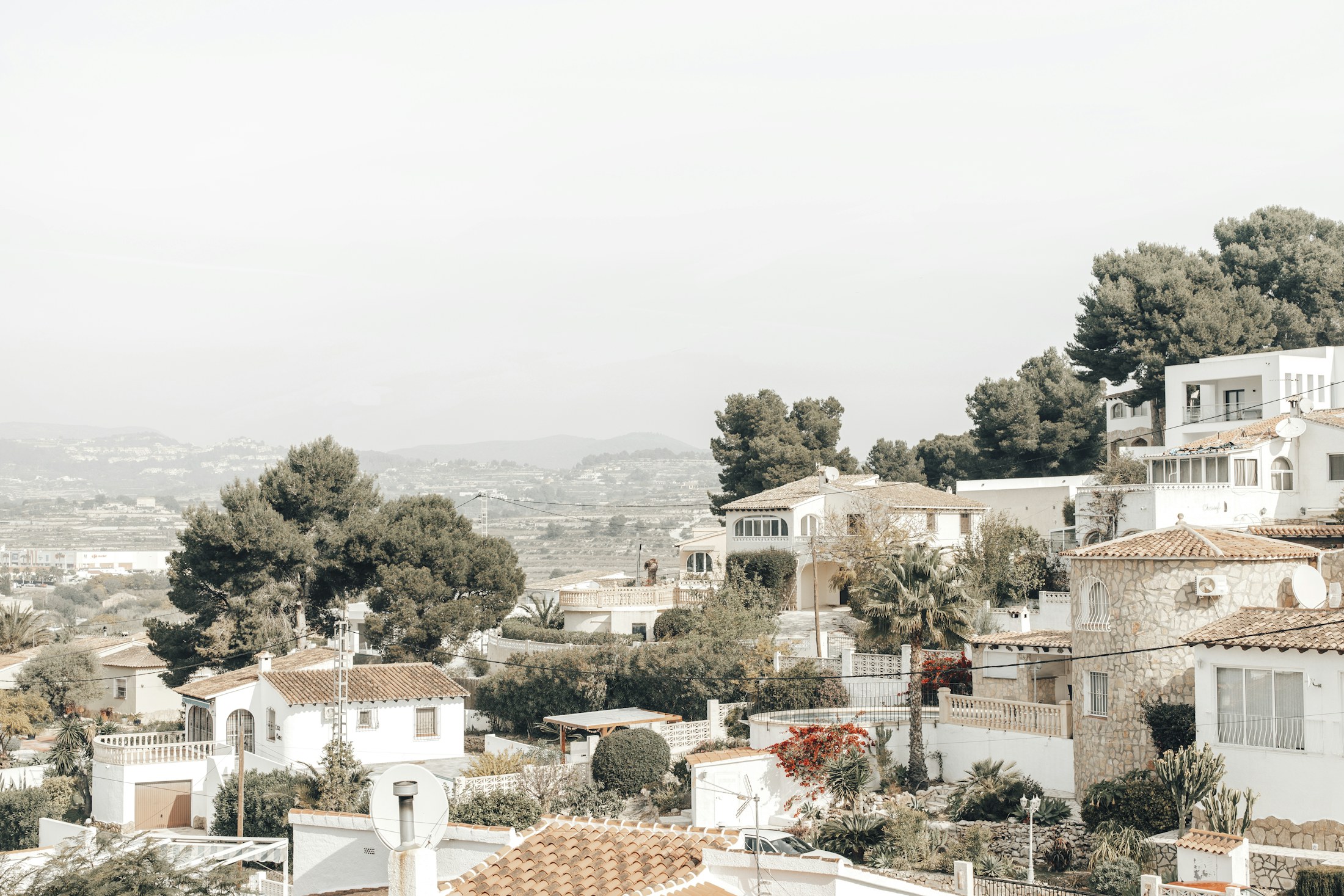
In the north of the Costa Blanca, white villas with terraces, low stone walls and pergolas predominate, while in the Marina Alta you will find traditional riuraus – arcaded porches once used for drying raisins. Today the riurau is one of the loveliest motifs to carry into a modern home as a covered terrace. The old towns of Altea and Xàbia are all whitewashed houses with blue accents, wrought-iron balconies and tosca stone from around Xàbia.
Interiors work best when they are light and spacious: white, sand, natural stone, wood and linen, with large glazed doors opening onto the terrace. The interior should flow outdoors – that is where most of the day is spent here. In apartments in the south, new floors, lighting and textiles are often enough to give them a calm, Mediterranean character.
The Costa Blanca is one of Spain's most versatile regions: sunny, well connected and with options for different budgets. The north will delight those looking for views and character, the south those who value affordability and modern developments. If you prefer a quieter, more Spanish atmosphere, consider the Costa Cálida or the Costa Azahar; if you want a big city, Valencia.
Sources: AEMET – climate normals for Alicante-Elche Airport (1981–2010) · Aena – Alicante-Elche Miguel Hernández Airport · Generalitat Valenciana – Decreto-ley 9/2024 · BOE – Ley Orgánica 1/2025 (amendment to the Ley de Propiedad Horizontal) · BOE – Real Decreto 1312/2024 (short-term rental register). Information as of September 2026.
Tell me about your plans. I will help you choose the right location and find a property that suits your lifestyle.