The "warm coast" of the Region of Murcia – intimate, sunny and still less obvious than the neighbouring Costa Blanca. The Costa Cálida combines the calm Mar Menor lagoon, historic Cartagena and the wild coves of Calblanque with everyday life in which Spaniards outnumber tourists.
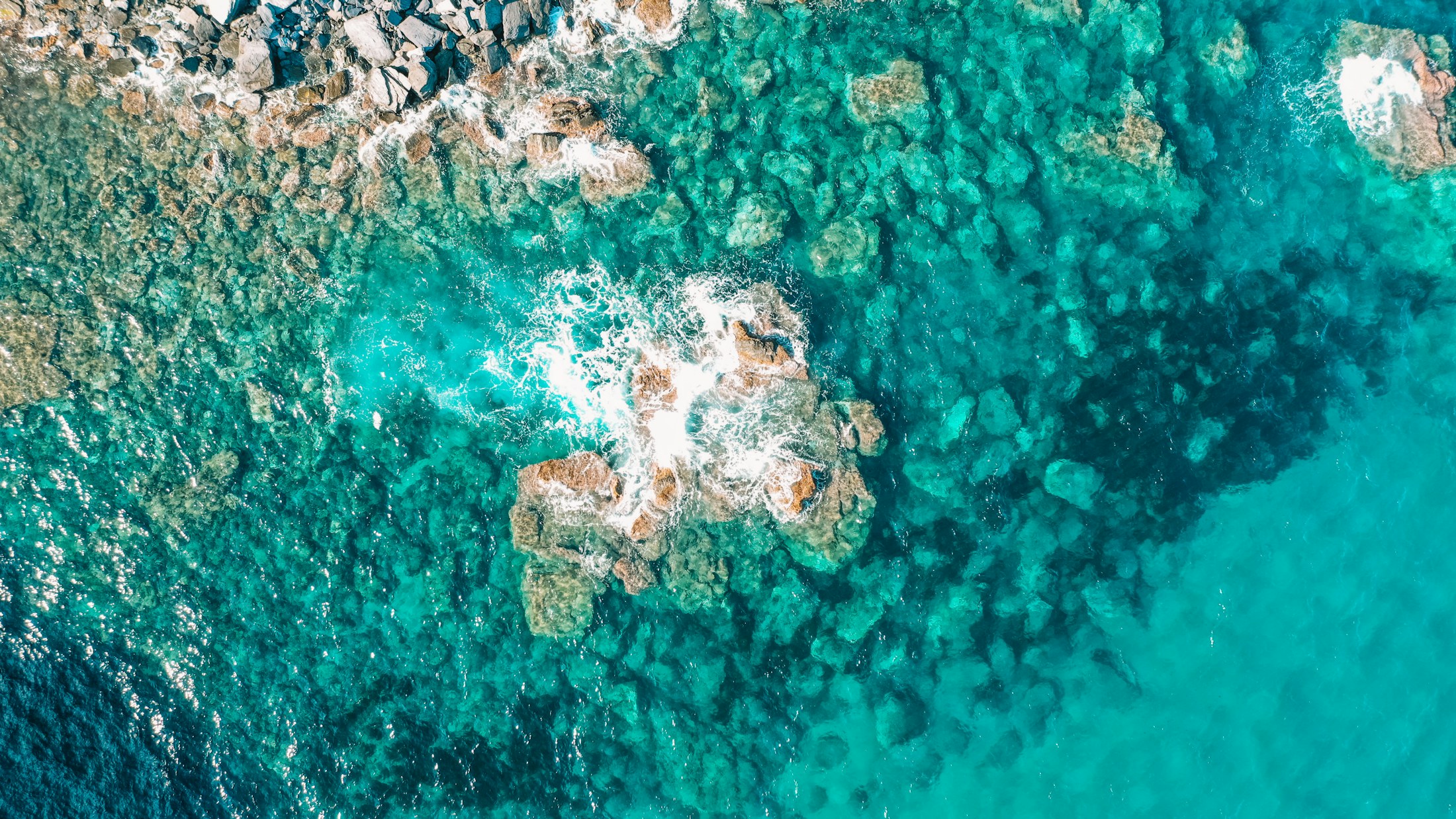
The Costa Cálida is an intimate and still very Spanish stretch of coast – less well known than the neighbouring Costa Blanca, but with plenty of sunshine and a calmer pace. It appeals above all to people who:
It is less likely to suit those expecting dramatic cliffs by the house, a lively nightlife or a wide choice of flights from the nearest airport.
The Costa Cálida is the coast of the Region of Murcia – from San Pedro del Pinatar on the Mar Menor to Águilas on the border with Andalusia. The northern part is formed by the Mar Menor, a vast saltwater lagoon separated from the sea by La Manga, a narrow strip of land. The water here is shallow and warmer than the sea, and wooden piers (balnearios) line the shores, which families use like private beaches.
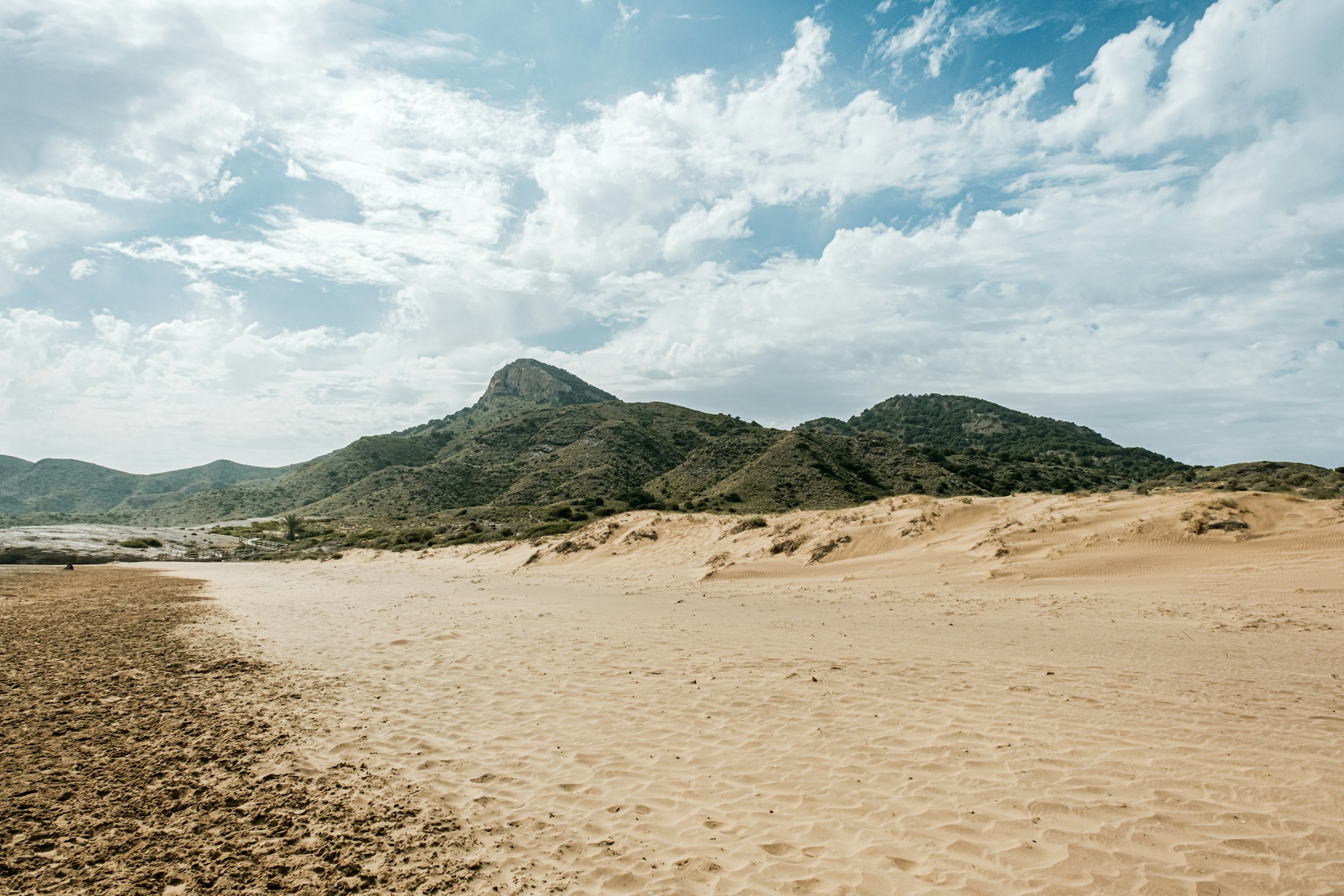
South of the lagoon lies Cabo de Palos, with its lighthouse and marine reserve, the wild coves of the Calblanque Regional Park and, further on, Cartagena – a port city with a Roman theatre, Modernista façades and a naval base. Further still stretches a quieter, more mountainous part of the coast: Mazarrón and Águilas, with coves, cliffs and small beaches.
Life moves at a slow, Spanish pace: tapas, markets, Sunday lunches by the sea and, in summer, late-night fiestas in the towns around the lagoon. Inland stretch citrus orchards and vegetable fields, while Murcia, the regional capital, provides hospitals, a university and shopping.
The region is also one of Spain's golfing hubs, with developments where many British and Scandinavian residents live – alongside them, the everyday life of the coastal towns carries on at its own, still largely Spanish pace.
According to AEMET climate normals (1981–2010) for the San Javier Airport station, the average temperature is around 10.8°C in January and around 25.5°C in August. Annual sunshine totals around 2,621 hours, with around 313 mm of rainfall.
Winters are mild and sunny – ideal for long stays from November to March – although evenings can feel chilly in unheated houses. Summers are hot and humid, with a sea breeze; in summer the lagoon warms up noticeably more than the open sea.
Rainfall is scarce, but autumn can bring violent downpours (DANA). In September 2019 these caused serious flooding in towns around the Mar Menor, including Los Alcázares. Year-round living is entirely possible here – provided you choose the location carefully.
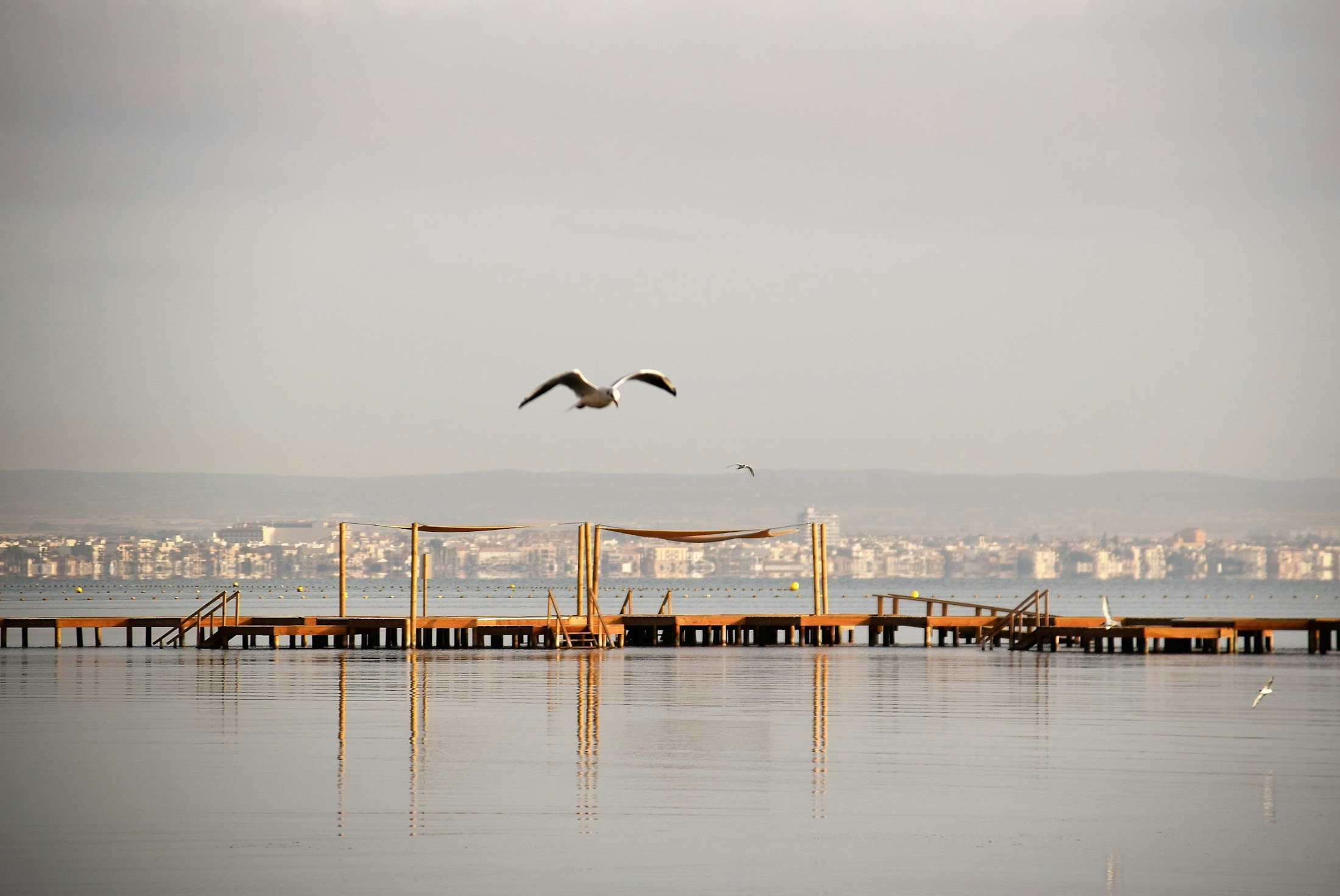
Family-friendly towns on the lagoon with wooden piers, promenades and calm water. They are lively all year round and have good infrastructure. When choosing a particular street, it is worth checking the flood risk.
A small town beside the Salinas de San Pedro regional park – with salt pans, flamingos and mud baths. Quiet and local, with beaches both on the lagoon and on the open sea.
A narrow strip of land between the lagoon and the sea, with apartments overlooking both waters. Busy in summer and very quiet in winter, when some services close. Buildings are tall and densely packed, and access is via a single main road.
A former fishing village with a lighthouse, harbour and restaurants, on the threshold of the Islas Hormigas marine reserve. Intimate and atmospheric, with a small selection of houses and apartments.
A year-round city with history, a port, a university and full infrastructure. For those who want to live in a real seaside city, in a period building or a newer apartment in the centre.
A fishing port, cliffs and quiet beaches. An affordable alternative to the better-known resorts, with a wide choice of apartments and houses on developments.
A small town with a castle, two bays and dozens of small beaches. Authentic and quiet, with open-sea swimming, and increasingly chosen for a second home.
Gated developments with golf courses, pools and services – popular with buyers from northern Europe. Convenient, but removed from the life of the towns.
Limitations worth knowing about:
Year-round living is best planned in Cartagena, Águilas, San Javier, Los Alcázares or San Pedro del Pinatar – there, schools, clinics and shops operate normally in winter. For retirees and remote workers, the mild winter is one of the region's main attractions.
A second home works particularly well on the lagoon and in La Manga (summers with children) and in the golf resorts (spring, autumn and winter). It is worth being honest with yourself about when you will actually come – that determines whether a beachside apartment or a house on a golf development will suit you better.
As an investment rental demand is clearly seasonal, with domestic tourists dominating in summer and guests from northern Europe in the golf resorts in winter. Holiday flats are subject to Murcia's regional rules and must be registered; since July 2025 a number from the national register (Real Decreto 1312/2024) is also required, and in buildings with a community of owners – the consent of three-fifths of the owners (Ley Orgánica 1/2025). We do not provide profit forecasts.
The character of the market. The market is largely domestic – in summer, families from Murcia and Madrid come here – with a distinct group of buyers from the UK and Scandinavia in the golf resorts. Prices are usually lower than in neighbouring regions, and the choice of houses with gardens is wide. Property values around the Mar Menor can be sensitive to the condition of the lagoon.
This information is general in nature and does not constitute legal or tax advice. Before buying, it is advisable to consult an independent lawyer and tax adviser.
Cartagena delights with Modernista façades from the early 20th century – the era of the mining boom – with balconies, stucco work and colourful render. Around the Mar Menor, the wooden balnearios on stilts and the early 20th-century summer villas of Santiago de la Ribera are characteristic. Low, whitewashed houses with patios dominate the towns, while in the countryside you will find traditional farmhouses surrounded by citrus groves.
Interiors suit a light, holiday-style minimalism: white, sand, the blue of the water, natural wood, wicker and linen. Cool stone or terracotta floors help on hot days, and shaded terraces, pergolas and reed matting are almost essential here. In homes used in winter, it is worth investing in warm textiles and good heating.
The Costa Cálida is a calm, sunny and affordable coast, ideal for families with children, golf lovers and anyone seeking a mild winter. It has none of the glitz of the Costa del Sol or the international bustle of the Costa Blanca – and that is precisely its strength. It does, however, call for a careful choice of location, especially around the Mar Menor. If you need a wide range of services, consider the neighbouring Costa Blanca; if you want an even wilder landscape, the Costa de Almería.
Sources: AEMET – climate normals for San Javier Airport (1981–2010) · Aena – Región de Murcia Airport · BOE – Ley 3/2020 on the protection of the Mar Menor · BOE – Ley 19/2022 (legal personhood of the Mar Menor) · BOE – Real Decreto 1312/2024 (short-term rental register) · BOE – Ley Orgánica 1/2025 (amendment to the Ley de Propiedad Horizontal). Information as of September 2026.
Tell me about your plans. I will help you choose the right location and find a property that suits your lifestyle.