Andalusia's wildest and sunniest coast – the volcanic coves of Cabo de Gata, white hilltop villages and landscapes reminiscent of North Africa. The Costa de Almería is the choice for those who are looking for space, nature and light rather than big resorts.
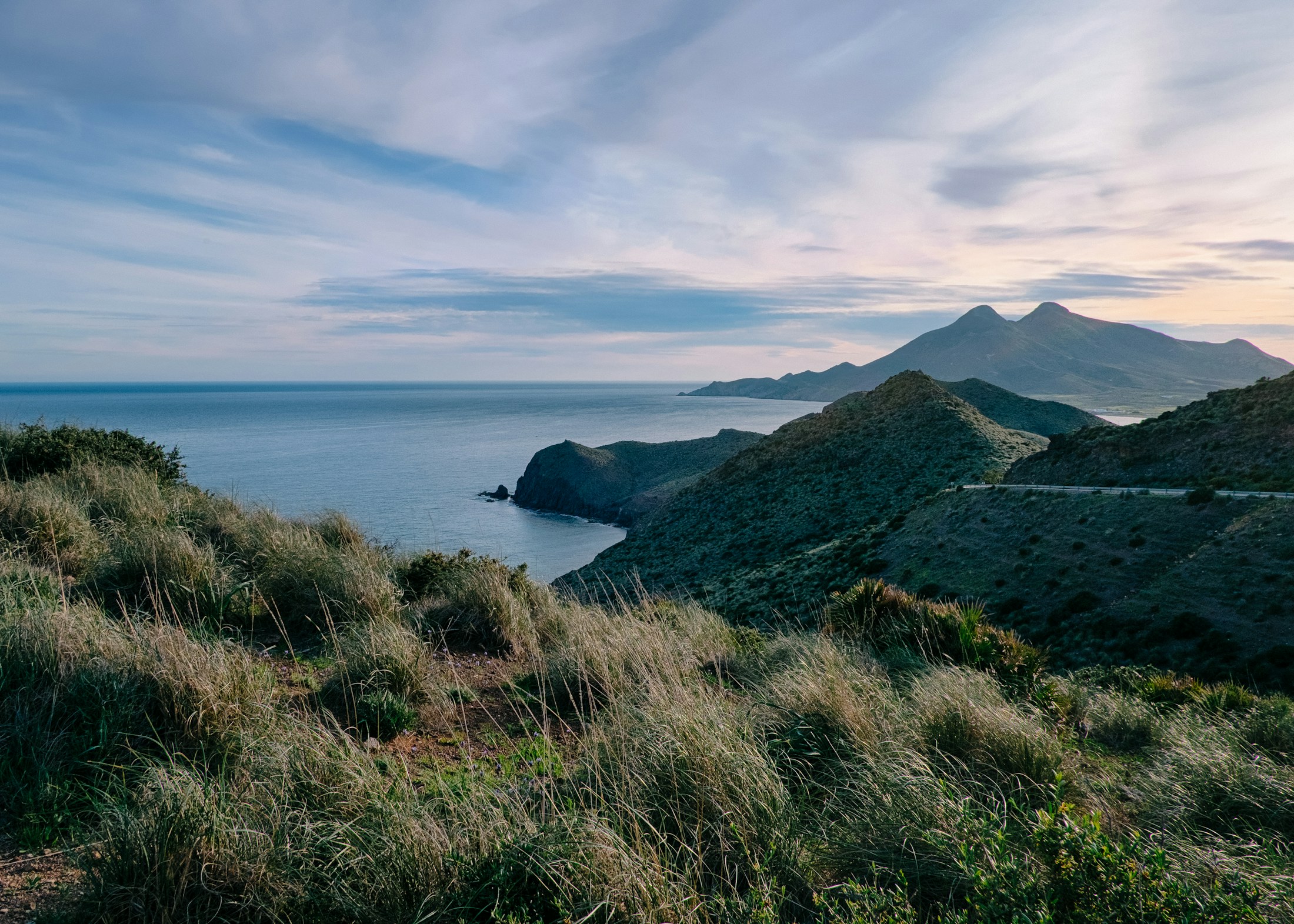
The Costa de Almería is a coast for people who look for space, light and nature more than resort-style convenience. It will suit you best if:
It is less suited to those who need frequent direct flights, a large international community or lush greenery – the landscape here is dry and semi-desert.
The Costa de Almería is the coast of Andalusia's easternmost province. Its most precious part is the Cabo de Gata-Níjar Natural Park – volcanic cliffs, wild beaches (Mónsul, Los Genoveses), lighthouses and small fishing settlements such as San José, Las Negras and Agua Amarga, where new building is tightly restricted. The story of the unfinished El Algarrobico hotel, ruled unlawful by the courts, shows how seriously coastal protection is taken here.
North of the park lies Mojácar – a white hilltop town with a maze of narrow streets – along with Garrucha and its fishing port, Vera with its long beaches, and Pulpí with its famous geode. West of Almería a completely different landscape begins: Roquetas de Mar and Aguadulce with beachside apartments, and beyond them the Campo de Dalías – a sea of greenhouses that supplies half of Europe with vegetables.
Almería, the provincial capital, has a Moorish Alcazaba, a port, a university and full infrastructure. Inland stretch the Tabernas Desert, where westerns were filmed, and the Sierra de los Filabres mountains.
The lifestyle is simple and calm: morning swims, grilled fish, long evenings on the terrace. Out of season, many villages in the park are very quiet – paradise for some, too much solitude for others.
According to AEMET climate normals (1981–2010) for the Almería Airport station, the average temperature is around 12.6°C in January and around 26.7°C in August. Annual sunshine totals around 2,994 hours – one of the highest figures in mainland Spain.
The climate is very dry, with mild, sunny winters and hot summers. Rain is rare, but when it does come it can be violent – the dry riverbeds (ramblas) can then fill with water very quickly. The wind, especially the levante from the east, can be strong and is worth bearing in mind when designing a terrace.
It is a good place to live permanently for anyone who struggles with grey northern winters. Homes above all need good shading and cooling in summer and, in winter, modest but efficient heating.
The main village of the Cabo de Gata park, with a harbour, a beach and access to the most beautiful wild coves. Limited supply, an intimate feel and great tranquillity out of season. Prices are above the provincial average because building is restricted.
Low, white fishing villages within the natural park. Agua Amarga is slightly more elegant, Las Negras more bohemian. Ideal for those seeking quiet and nature; the choice of property is very limited.
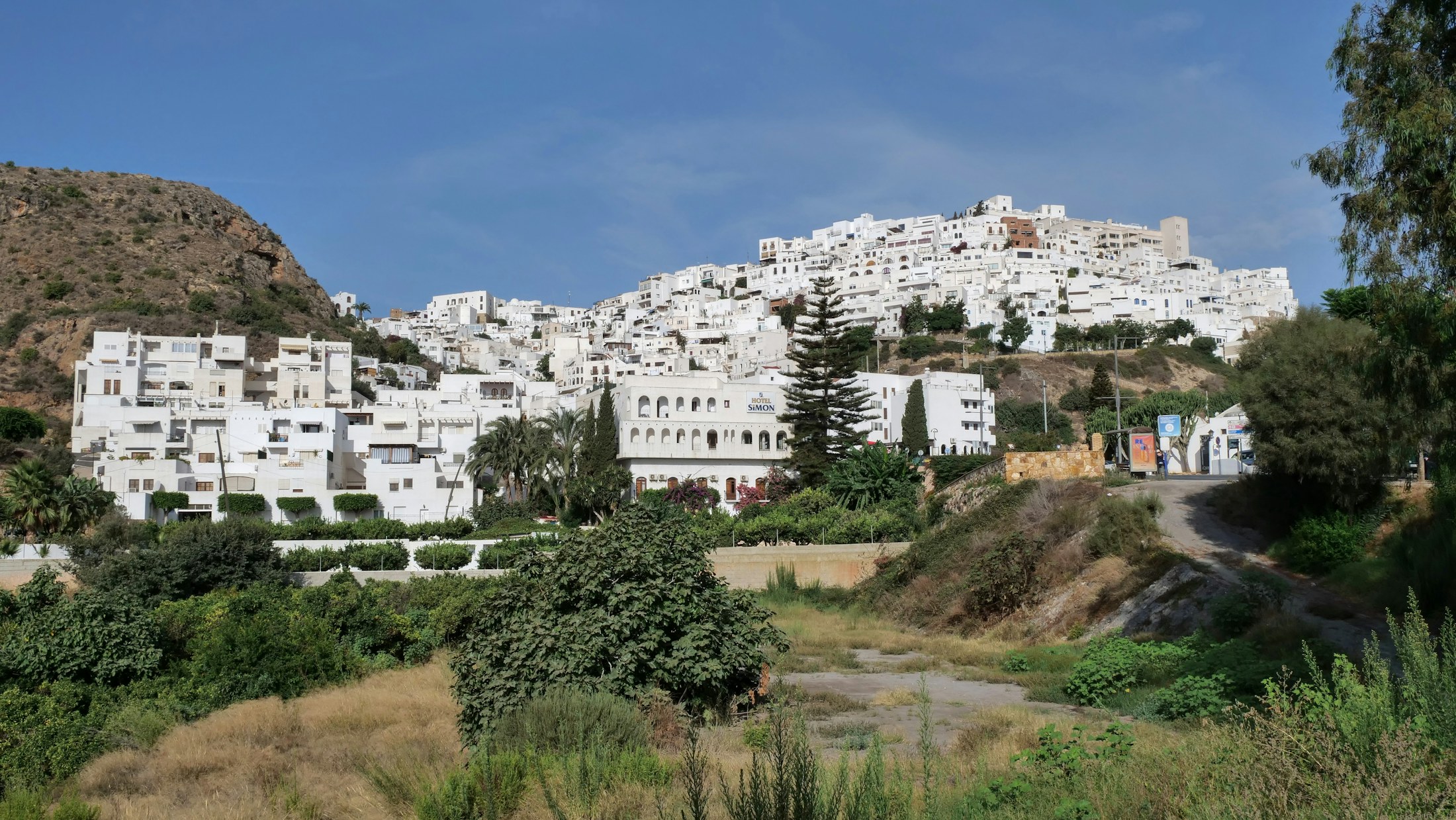
A white hilltop village with a long beach at its foot. An international community, restaurants, homes with sea views and life all year round. The most "familiar" town in the region for buyers from abroad.
Vera has long beaches and newer apartment developments; Garrucha has a fishing port and a promenade. Practical, affordable places with services open all year round.
A year-round city with a port, a university and hospitals. Affordable apartments and life among local residents, with Cabo de Gata a short drive away.
Seaside towns west of Almería, with a marina, beaches and a wide choice of apartments. Convenient and affordable, but close to extensive greenhouse farming.
A small town famous for its ceramics and hand-woven jarapa rugs, with houses and cortijos set in the park's landscape. For those who want to live in the countryside with the sea a short drive away.
Limitations worth knowing about:
Year-round living is easiest to arrange in Almería, Mojácar, Vera or Roquetas – that is where the schools, clinics and shops are. It is possible to live all year round in the villages of the Cabo de Gata park, but you need to enjoy quiet, short opening hours and driving for bigger shopping trips.
A second home is the natural role of San José, Agua Amarga or Las Negras – for summer, spring and autumn, for those who come for nature and peace rather than resort infrastructure.
As an investment the region is seasonal and sees less tourist traffic than western Andalusia. Strict building rules apply in the natural park, and holiday lets must be entered in the Andalusian register; since 2024, regional rules (Decreto 31/2024) have allowed municipalities to limit the number of holiday flats. Since July 2025, short-term rental listings must also carry a number from the national register (Real Decreto 1312/2024). We do not provide profit forecasts.
The character of the market. This market is smaller and calmer than the Costa del Sol's. Around Mojácar and Vera, British and other European buyers have been purchasing for years; in the Cabo de Gata park it is mainly Spaniards and nature lovers from northern Europe. The supply in the park's villages themselves is very limited, and many rural cortijos have a complicated planning history, which lengthens the buying process.
This information is general in nature and does not constitute legal or tax advice. Before buying, it is advisable to consult an independent lawyer and tax adviser.
Almería's architecture is simple and cubic: white houses with flat roofs (terraos), thick walls that keep out the heat, small windows and inner patios. Many of these features have their roots in Moorish culture. Inland cortijos have stone walls, roofs of reed and clay and, beside the houses, aljibes – old rainwater cisterns.
Interiors suit a pared-back minimalism: white, clay, sand, wicker, handmade Níjar ceramics and colourful jarapas. Fewer objects, more light and shade – a style that fits this landscape perfectly. When renovating a cortijo, it is worth keeping the thick walls and small windows on the sunny side and opening the house towards shade and views – natural, energy-efficient air conditioning.
The Costa de Almería is the choice for those who value nature, space and sunshine more than resort infrastructure. Cabo de Gata offers an exceptional landscape and peace, Mojácar and Vera convenience and an international community, and Almería a year-round city. If a major airport and extensive infrastructure matter more to you, consider the Costa del Sol; if you want greenery and mountains right by the sea, the Costa Tropical.
Sources: AEMET – climate normals for Almería Airport (1981–2010) · Aena – Almería Airport · Junta de Andalucía – holiday flats (viviendas de uso turístico) · BOJA – Decreto 31/2024 (holiday flats in Andalusia) · BOE – Real Decreto 1312/2024 (short-term rental register) · BOE – Ley 22/1988 de Costas. Information as of September 2026.
Tell me about your plans. I will help you choose the right location and find a property that suits your lifestyle.