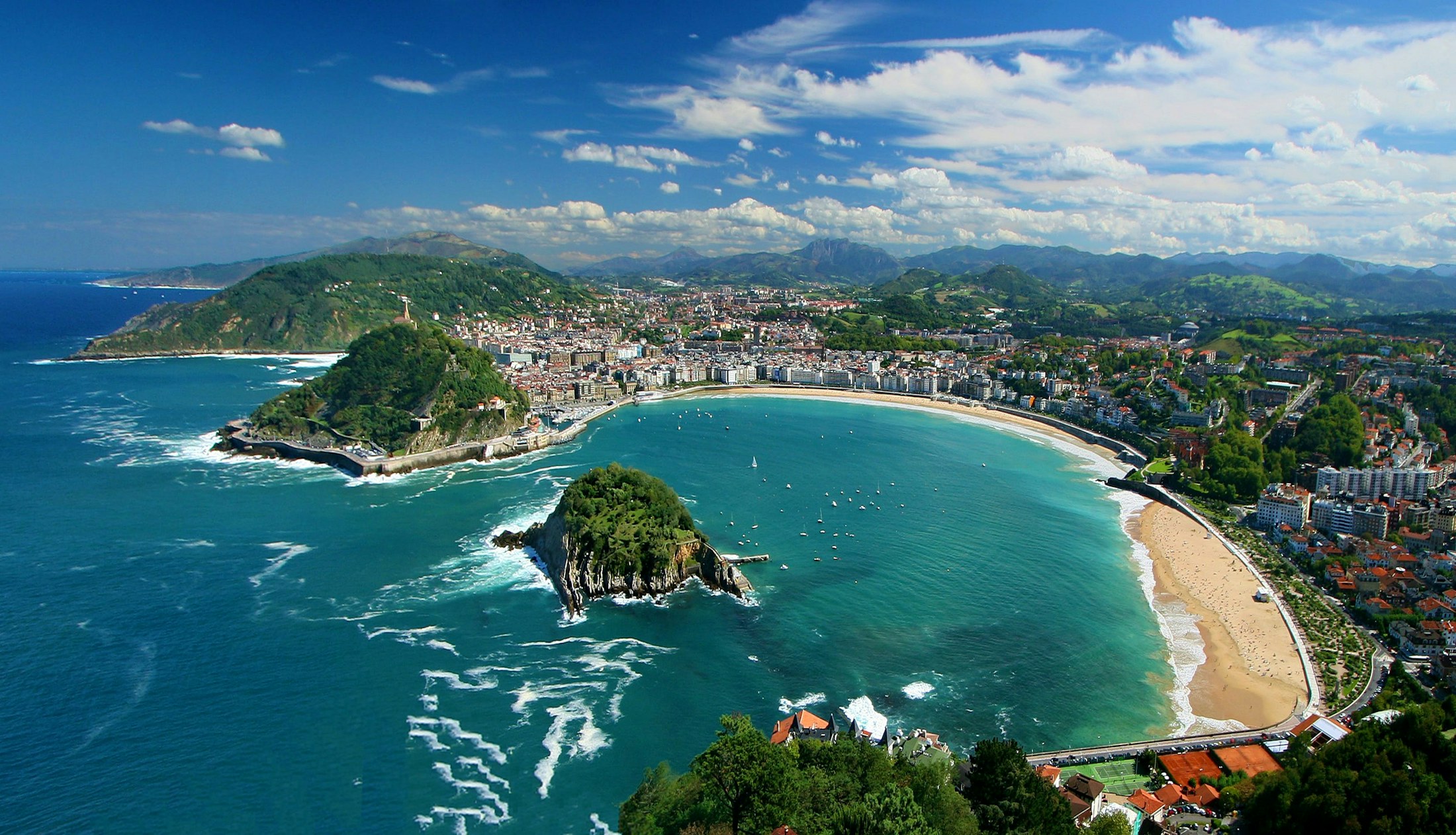
Green hills running down to the Atlantic, San Sebastián with the bay of La Concha, and a cuisine that draws people here from all over the world. The Costa Vasca is an entirely different Spain from the sunny south – year-round, urban, elegant and green.
The Costa Vasca is a considered choice – for those who look to Spain for quality of life rather than guaranteed sunshine. Take a closer look if:
Do not come here looking for winter sunshine, affordable prices, a house with a pool by the beach or holiday-letting opportunities – in San Sebastián, that last path is heavily restricted.
The Costa Vasca is the Atlantic coast of the Basque Country – the provinces of Gipuzkoa and Bizkaia. Its heart is San Sebastián (Donostia): a city of Belle Époque architecture, with the bay of La Concha, Zurriola beach for surfers and the Parte Vieja full of pintxos bars. San Sebastián is famous for its exceptionally strong food scene and high-end restaurants.
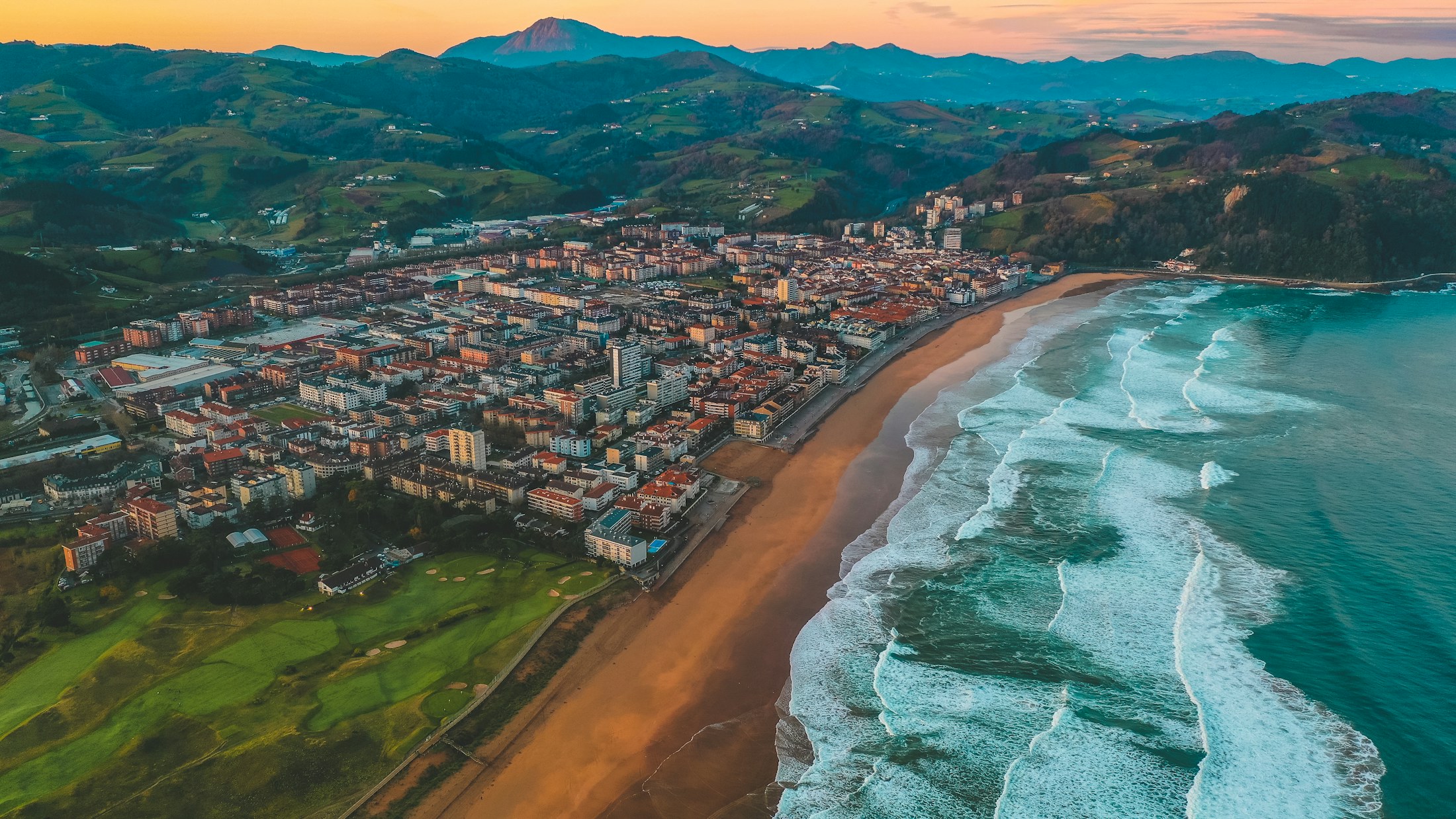
West of San Sebastián lie Zarautz with its long surf beach, Getaria – a fishing port, birthplace of Elcano and Balenciaga, famous for its txakoli wine – and Zumaia with its flysch cliffs (a UNESCO Global Geopark). Further on, in Bizkaia, stretches the Urdaibai Biosphere Reserve with Mundaka and Bermeo, and near Bilbao the elegant seaside town of Getxo. In the east, on the French border, is walled Hondarribia. Bilbao, with the Guggenheim Museum, is the region's second, more industrial and dynamic centre.
Life goes on all year round: pintxos after work, walks along the promenade, surfing in every season and a strong Basque culture – with its own language (Euskara), sports, gastronomic societies (txokos) and traditions. The international community is smaller than in the south, and integration happens mainly through local life, school and work.
According to AEMET climate normals (1981–2010) for the Donostia / San Sebastián, Igeldo station, the average temperature is around 8.5°C in January (average maximum around 11°C) and around 19.5°C in August (average maximum around 22.5°C). Annual sunshine totals around 1,816 hours, with around 1,507 mm of rainfall.
This is an oceanic climate: mild all year round, humid and green, with frequent rain and warm, rarely scorching summers. The Igeldo station sits on a hill – it can be slightly warmer in the city. There are days with a southerly wind that suddenly pushes temperatures up, even in winter, and storms that bring spectacular waves over the promenades in winter.
The most reliable weather is usually from June to September, but rain can come at any time of year. Living here permanently is very comfortable – provided you have good heating and insulation and accept that an umbrella is an everyday accessory.
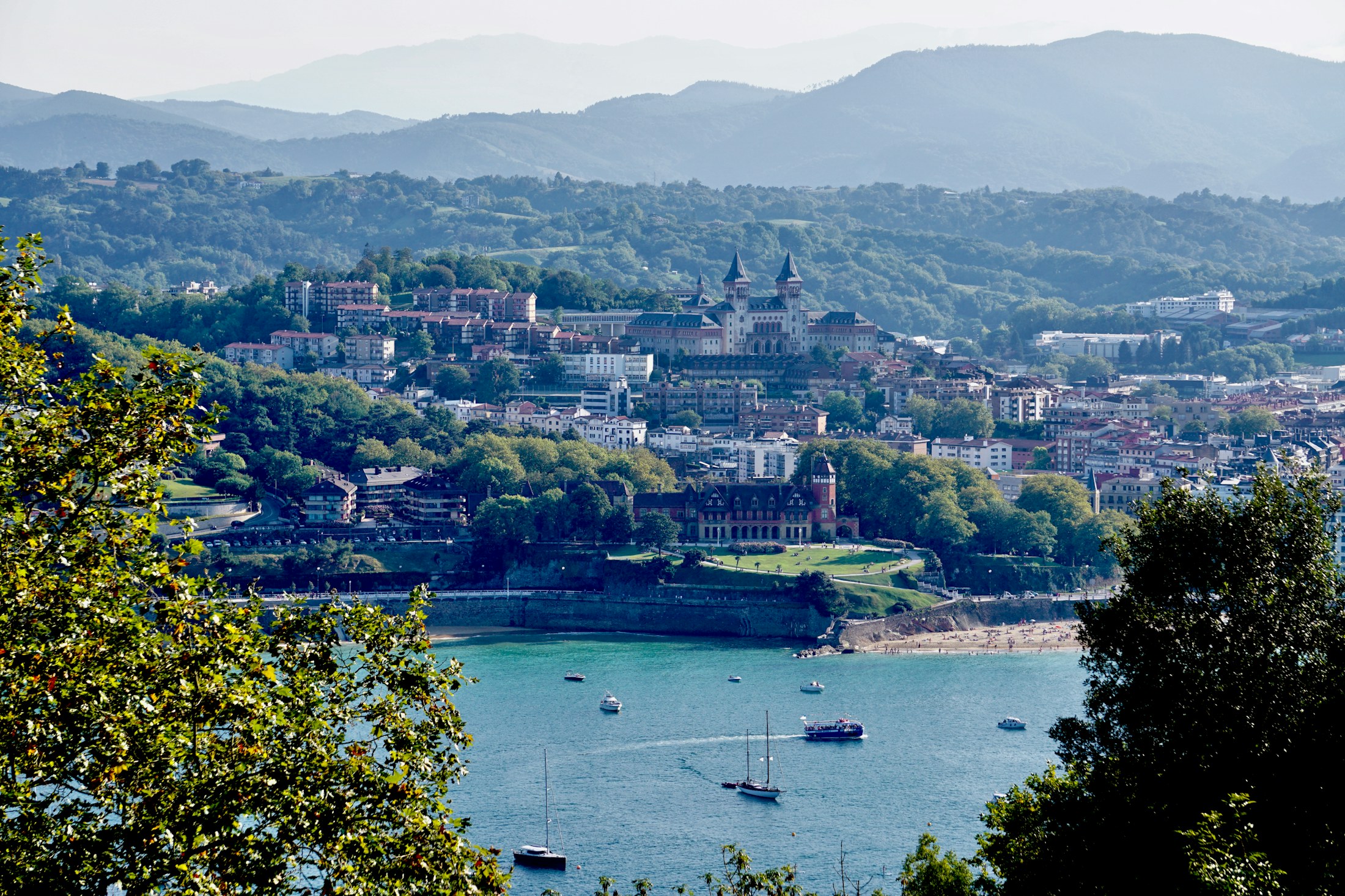
Elegant period buildings by La Concha and in Centro, the atmospheric but noisy and touristy Parte Vieja, and younger, surf-loving Gros across the Urumea river. One of the most sought-after addresses in Spain, with very limited supply.
Quieter, family-friendly districts in the west of the city, villas and apartments overlooking the bay and, higher up, the green slopes of Igeldo. Prestige and peace, with Ondarreta beach close at hand.
A long beach, surfing and a family atmosphere, with full infrastructure all year round. A good alternative to San Sebastián, with the Euskotren train into the city.
Getaria is a fishing port with txakoli vineyards on its slopes, and Zumaia has spectacular flysch cliffs and Itzurun beach. Intimate and authentic, with very few properties on the market.
Medieval walls, a colourful fishermen's quarter, a marina and proximity to France and the airport. Elegant and calm, ideal for those who want to live "on both sides" of the border.
A small town famous for one of the best left-hand waves in Europe, in the heart of the Urdaibai Biosphere Reserve. For lovers of surfing and nature.
A seaside suburb of Bilbao with villas, beaches and a harbour, connected to the centre by metro. The choice of families who want to combine life by the sea with work in Bilbao.
Limitations worth knowing about:
Year-round living is this region's natural calling – San Sebastián, Zarautz, Hondarribia and Getxo have full infrastructure and function normally 12 months a year. Families should bear in mind that Basque is often the main language of instruction in state schools; there are also international and private schools.
A second home works as a summer escape from the heat of the south and a place for long weekends – especially for those who value gastronomy and surfing more than lying on the beach.
As an investment the region has steady demand for long-term rentals, and the tourist season runs from spring to autumn. Holiday flats, however, are strictly regulated, and the San Sebastián authorities have for years pursued a restrictive policy on new licences – it is worth checking the current rules with the city council before buying. Since April 2025, the community of owners also has a say in any new holiday let in a multi-family building (the consent of three-fifths of the owners is required, Ley Orgánica 1/2025). Check the local regulations before you buy. We do not provide profit forecasts.
The character of the market. This is primarily a local, residential market – buyers are mainly Basques and people from other Spanish regions, as well as the French. Supply is very limited by the terrain and landscape protection, and prices in San Sebastián are among the highest in the country. The Basque Country has its own (foral) tax system, managed by the provinces – taxes on buying and owning property here differ from the rest of Spain.
This information is general in nature and does not constitute legal or tax advice. Before buying, it is advisable to consult an independent lawyer and tax adviser.
San Sebastián is Belle Époque elegance: period buildings with bay windows and wrought-iron balconies, villas above the bay and Art Nouveau details, and in the Parte Vieja stone houses with wooden balconies. The countryside is dominated by baserri – large stone-and-timber houses with red or green shutters, built to withstand rain and wind, often with living quarters, stable and barn under one roof. Contemporary Basque architecture – from Rafael Moneo's Kursaal to Frank Gehry's Guggenheim – shows that the region is not afraid of modernity.
Interiors suit a warm minimalism: natural wood, stone, wool and linen, ceramics and a muted palette of greens, greys and off-white. A fireplace and a comfortable reading corner quickly become a favourite spot in the house here. When renovating a period flat, it is worth keeping the wooden floors and joinery while making sure the insulation and ventilation are modern.
The Costa Vasca will win over those who value greenery, a mild climate, culture and outstanding cuisine – and want to live somewhere that is alive all year round. Compared with the south, it is more urban and Atlantic, less sunny and more expensive, but with an exceptional quality of everyday life. If sunshine and warmth in winter are your priority, consider the Costa del Sol or the Canary Islands.
Sources: AEMET – climate normals for Donostia / San Sebastián, Igeldo (1981–2010) · Aena – San Sebastián Airport · Aena – Bilbao Airport · Ayuntamiento de Donostia / San Sebastián – holiday flats · BOE – Ley Orgánica 1/2025 (amendment to the Ley de Propiedad Horizontal). Information as of September 2026.
Tell me about your plans. I will help you choose the right location and find a property that suits your lifestyle.