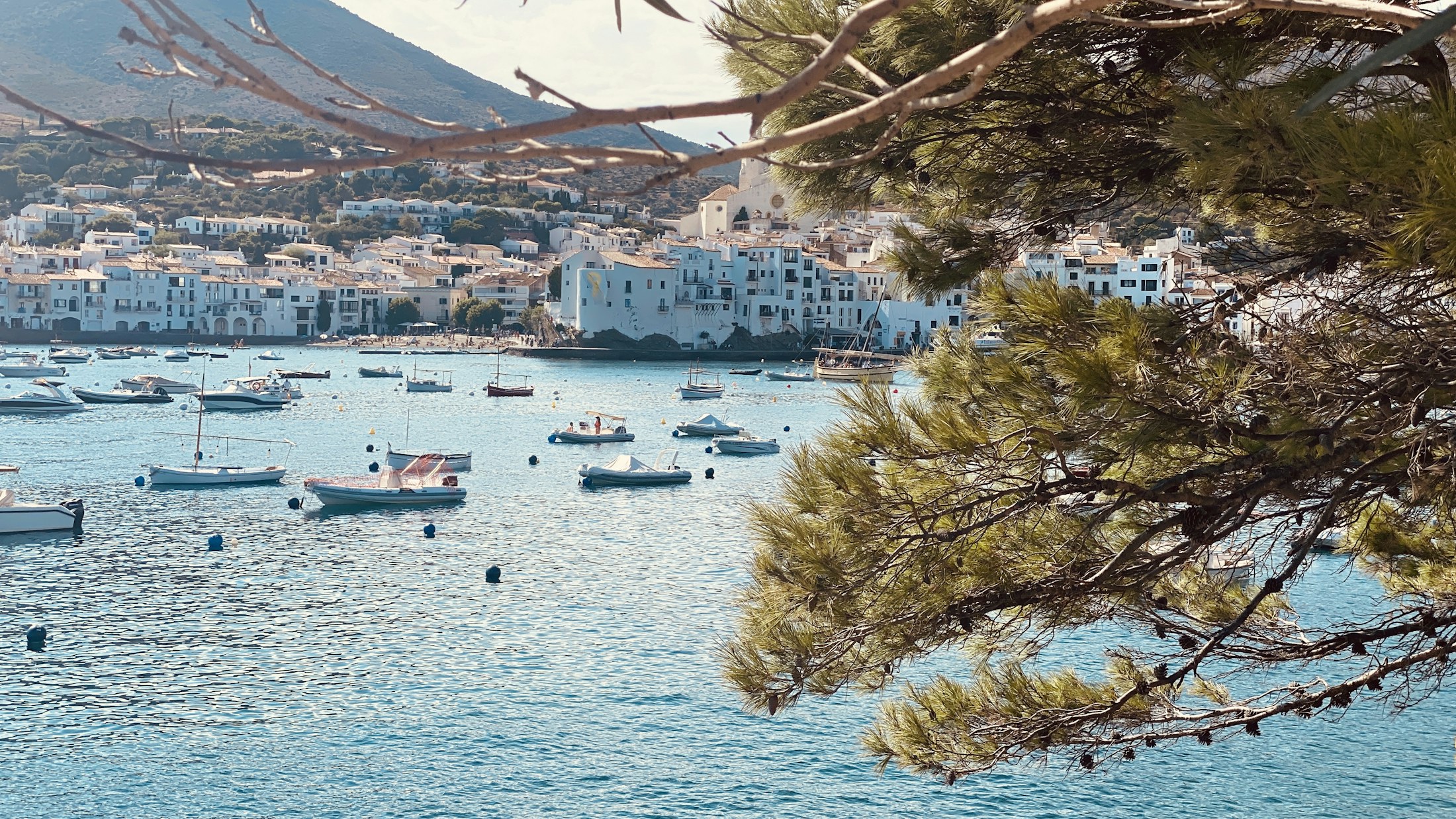
Rocky coves, pine trees reaching down to turquoise water and white villages that have kept their character. The Costa Brava is the most picturesque stretch of the Catalan coast, a place for those who are looking for beauty and authenticity rather than big resorts.
The Costa Brava is best suited to people looking for Mediterranean character without the anonymity of large resorts. It is a region for those who:
The Costa Brava, the “wild coast”, is the coastal part of the province of Girona, stretching from Blanes to the French border. Its landscape is made up of reddish rocks dropping into the sea, pine trees growing almost at the water’s edge, small coves (cales) and former fishing villages with white houses. Along the coast runs the historic path Camí de Ronda, and many of its sections can be walked from cove to cove.
The region has several distinctly different faces. In the north, in Alt Empordà, the rugged, windswept landscape of the Cap de Creus Natural Park and artistic Cadaqués dominate. The central part, Baix Empordà, is home to the most sought-after towns – Begur, Calella de Palafrugell, Llafranc and Tamariu – with a hinterland of fields, medieval villages and stone masies. The south, around Lloret de Mar and Blanes, is more built-up and geared towards mass tourism.
Life here is calmer than in the south of Spain. The day revolves around a morning coffee in the square, the market, lunch at a seaside restaurant and a sunset stroll. Empordà cuisine is known for combining “sea and mountains” (mar i muntanya), anchovies from L’Escala, prawns from Palamós and local DO Empordà wines. In summer the region comes alive with festivals and concerts, while out of season many smaller towns noticeably slow down.
The Costa Brava has a Mediterranean climate with four distinct seasons. Summers are warm and sunny but usually less scorching than in the south of the country, and winters are mild, though cooler than on the Costa del Sol or in the Canary Islands.
For reference: according to AEMET climate normals (1981–2010), at the Girona Aeropuerto station the average January temperature is around 7°C (average maximum around 13°C) and the average July temperature around 23.6°C (average maximum around 30°C). The station lies inland; right by the sea, winters are usually slightly milder and the summer heat less noticeable.
The beach season realistically runs from June to September, while May, June, September and October are the most pleasant months for living and exploring. A characteristic feature of the northern part of the region is the tramuntana – a strong, cold northerly wind that is felt particularly around Cap de Creus and Roses. The region is well suited to year-round living, provided you choose a town that does not “shut down” after the season.
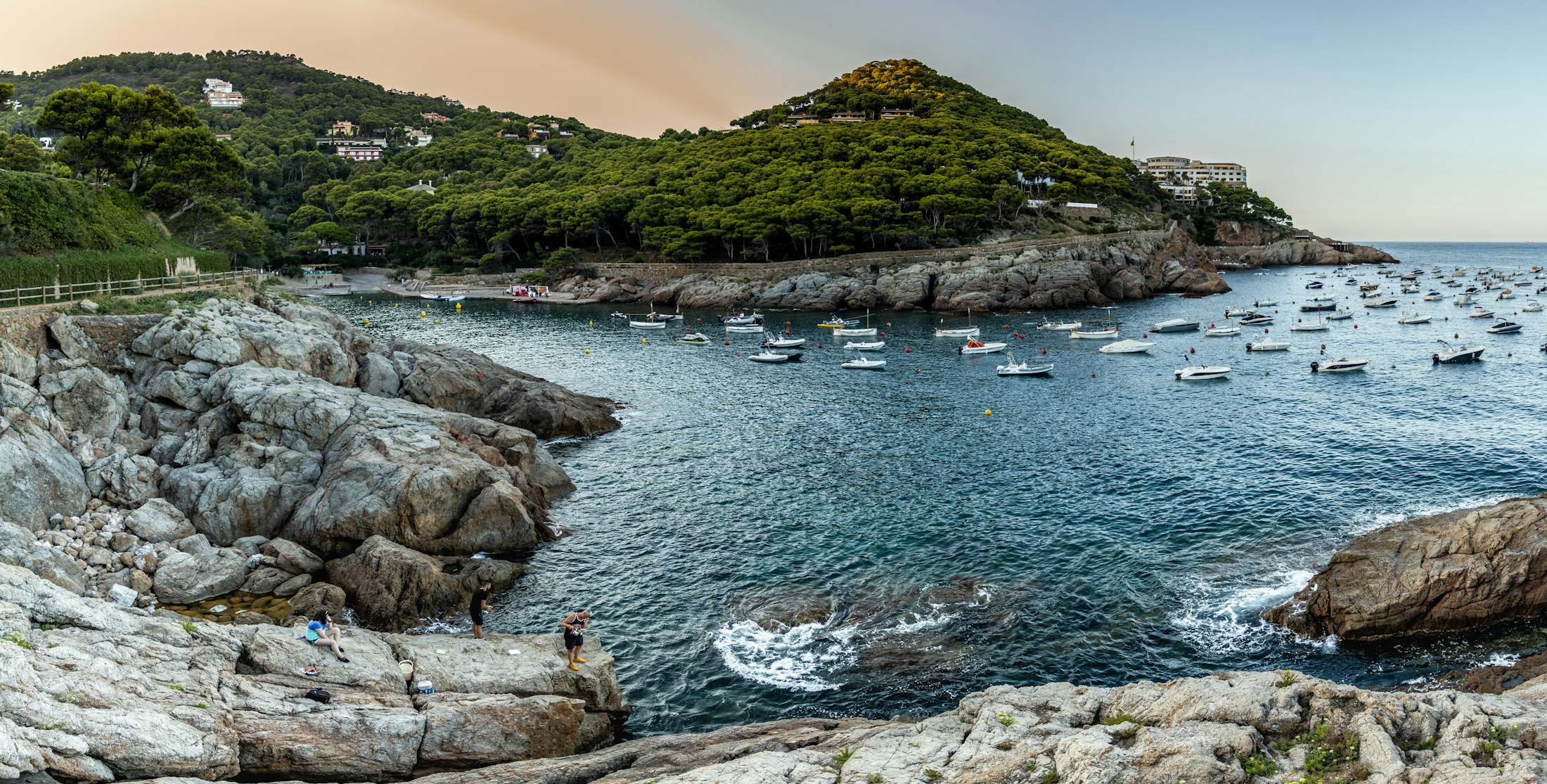
A medieval hilltop town with castle ruins, colonial indianos houses and access to some of the most beautiful coves in the region: Aiguablava, Sa Tuna and Aiguafreda. It is the address for those seeking an exceptional sea view, privacy and a boutique character. Villas on the hillsides and houses in the historic centre predominate; supply is limited and prices are among the highest on the Costa Brava.
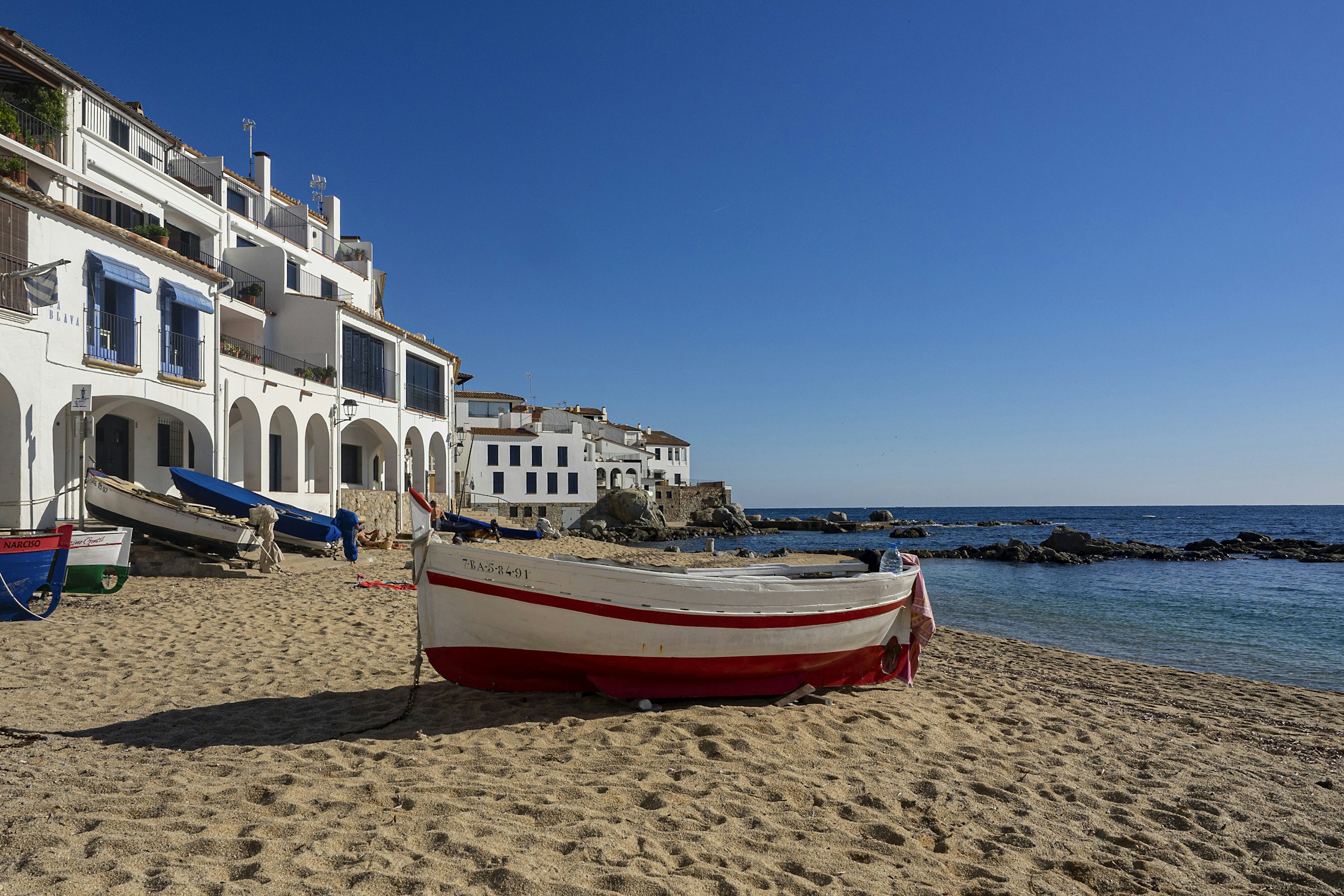
Three seaside villages in the municipality of Palafrugell that are regarded as the essence of the Costa Brava. Calella charms with its white houses above the fishing boats and the Cap Roig gardens, Llafranc with its elegant promenade on the bay, and Tamariu with its intimacy. Ideal for a second home and family summers. Out of season they are very quiet, while normal year-round life carries on in nearby Palafrugell.
A white town at the end of a winding road, surrounded by the Cap de Creus Natural Park and associated with Salvador Dalí, who lived in nearby Portlligat. It attracts artists and people looking for a place with soul rather than convenience. You have to accept a longer journey, the tramuntana and very limited supply – but for many, that is precisely its greatest appeal.
S’Agaró is an exclusive garden estate designed in the 1920s, with seafront villas and a stretch of the Camí de Ronda. Neighbouring Platja d’Aro is its opposite: lively, with a long beach and shops and restaurants open for most of the year. Together, the pair suit people who want peace and quiet at home and every amenity just a few minutes away.
A few kilometres from the sea lie stone medieval villages – Pals, Peratallada, Monells – surrounded by fields, orchards and golf courses. This is the direction for those dreaming of a restored masia with a garden and pool, peace and space, with the beach a short drive away.
Family-friendly towns on the Bay of Roses: L’Escala is famous for its anchovies and the ancient ruins of Empúries, L’Estartit for its proximity to the Medes Islands and the Montgrí, Medes and Baix Ter Natural Park, much loved by divers. A more reasonable price level than in Begur, more apartments and practical infrastructure.
A genuine fishing port, famous for its prawns, gamba de Palamós, with a marina, schools and services open all year round. A good choice for those who want to live on the Costa Brava permanently, not just spend their holidays here.
For your own use the Costa Brava works particularly well: as a family summer home, a place for long weekends or – in larger towns such as Palamós, Platja d’Aro or Roses – as a year-round home.
As an investment the region is clearly seasonal. Rental demand is concentrated in July and August, and the shoulder season is shorter than in the south of Spain. In addition, since November 2023 Catalonia has had rules in place (Decret llei 3/2023) that restrict new tourist-rental licences in 262 municipalities, including many towns on the Costa Brava. Before buying with short-term letting in mind, you need to check the licence status of the specific property and the rules in the municipality. We do not provide profit forecasts; every investment is worth analysing individually.
This information is general in nature and does not constitute legal or tax advice. Before buying, it is advisable to consult an independent lawyer and tax adviser.
Costa Brava architecture combines whitewashed fishermen’s houses, the stone masies of the Empordà and elegant villas from the first half of the 20th century. Natural materials predominate – local stone, timber ceiling beams, handmade terracotta, ceramics and lime plaster – along with muted colours: white, sand, ochre and the blue of the sea.
Inside, a calm Mediterranean minimalism works well: linen, cotton, wicker and rattan, wood in its natural tone, plenty of light and a seamless flow between the interior and the terrace. When renovating a masia or a house in an old town centre, it is worth preserving the original vaults, stonework and beams: they create a unique character that is hard to recreate later.
The Costa Brava is the choice for those looking for beauty, authenticity and nature rather than big resorts. It works best as a second home or a place for long stays, and in the larger towns also as a year-round home. If you value intimate coves, good food and the proximity of Girona and Barcelona – and mild but real winters do not bother you – this region may be for you. If your priority is a high year-round rental return or guaranteed winter warmth, it is worth comparing it with the south of Spain.
Sources: AEMET – Girona Aeropuerto climate normals (1981–2010) · Aena – Girona-Costa Brava Airport · Generalitat de Catalunya – Decret llei 3/2023 · Parcs Naturals de Catalunya. Information as of September 2026.
Tell me about your plans. I will help you choose the right location and find a property that suits your lifestyle.