A Mediterranean-style terrace – how to furnish one in a Spanish flat, and what not to do without your community’s approval

In Spain, a terrace or balcony is often the most-used “room” in the flat: you have breakfast there, work in the shade and spend the evening by lantern light. I show how to furnish it in a Mediterranean spirit in 2026 – and which changes (an awning, a pergola, an enclosure) call for a conversation with the community administrator first.
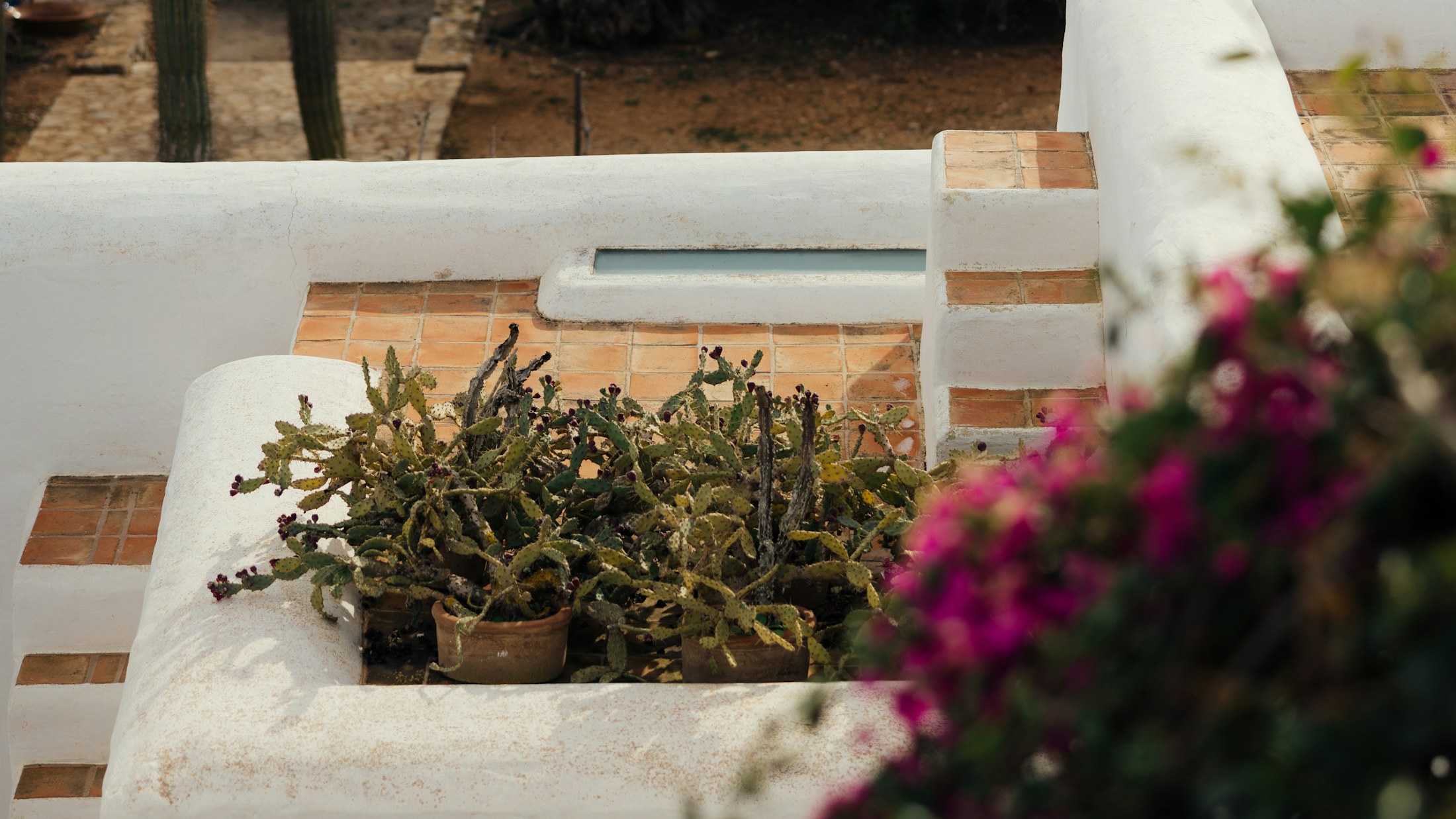
Bielone murki, schodki z terakoty, rośliny w donicach i kwitnąca bugenwilla na Ibizie
Photo: Eirik Skarstein / Unsplash

A Mediterranean terrace doesn’t start with a matching set of garden furniture. It starts with three questions: where the shade is, how the wind blows and when you will actually sit out here. Only then do you choose materials, colours and accessories. Below I set out the design directions visible in current terrace schemes and suggest what is worth choosing if this is your holiday flat or a property you let out.

Terrace design directions for the 2026 season

This year’s Spanish and French interiors magazines and furniture brands’ collections keep returning to a few themes. Treat them as current directions and inspiration rather than fixed rules:

  • The terrace as an extension of the living room. Increasingly, a single table is giving way to zones: dining, lounging and sometimes a small outdoor kitchen. Materials and colours echo those used indoors (SeLoger, May 2026; ¡HOLA! Living, July 2026).
  • An earthy palette. Terracotta, ochre, sand, clay and muted greens and blues are often suggested – colours that age well and don’t tire the eye in strong sunlight (SeLoger; ¡HOLA! Living).
  • Wood and natural fibres – but durable. This season’s collections feature teak and acacia, rattan and rope, often combined with powder-coated aluminium so that furniture stays light and weather-resistant (Kave Home via ¡HOLA!, March 2026).
  • Wrought iron in simpler, more modern lines and stripes, checks and botanical prints on fabrics – a “holiday” touch that is easy to change; this is how, among others, La Redoute’s outdoor collection was shown at Living Day 2026 (via ¡HOLA!, May 2026).
  • Warm, low lighting. Rather than a single bright floodlight, the suggestion is string lights, wall lights, lanterns and portable LED lamps charged by solar power or USB-C (SeLoger; Kave Home).
  • Bioclimatic pergolas with adjustable louvres, described as a way to extend the terrace season – in a flat within a community, though, it is worth checking the rules first (more on this below).

1. Shade comes first

In Spain, from May to October the sun decides whether the terrace gets used at all. The options, starting with the simplest:
  • A large parasol with a heavy base – the simplest option; it usually doesn’t affect the façade or the common elements. On the coast, choose a vented, well-weighted model: the wind (for example the levante around the Strait of Gibraltar or the tramontana on the Costa Brava and Menorca) can be strong.
  • A shade sail – light, inexpensive and good-looking in a pale linen shade. If it needs anchors fixed into a wall or the façade, that may count as interfering with common elements – it is worth asking the administrator.
  • An awning (toldo) – a classic of Spanish apartment blocks. In many communities the bylaws or resolutions specify a single model and fabric colour so that the façade looks consistent.
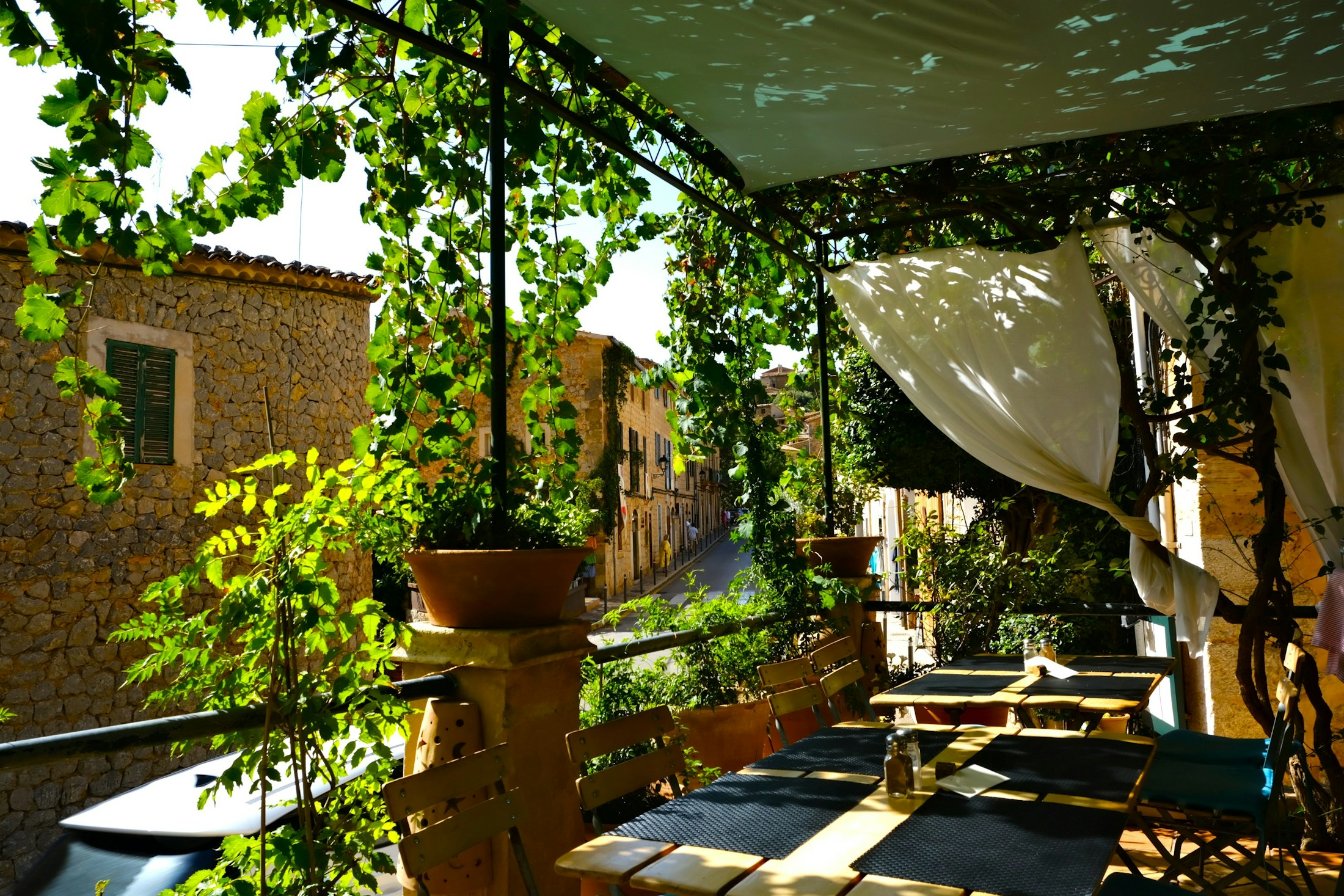
  • A pergola with reed matting (cañizo) or wood – the most “Mediterranean” effect, typical of gardens, patios and roof terraces (ático).
Zacieniony taras z pergolą porośniętą winoroślą, lnianymi zasłonami i drewnianymi stołami w Deià na Majorce
Photo: Lisette Harzing / Unsplash

2. Floors and walls: less, but with character

On a terrace, what matters is what is underfoot and behind you. In a rented or newly bought flat you often can’t replace the flooring – but you can “warm it up”:

  • An outdoor rug in synthetic fibre with a jute look or stripes – it instantly defines a lounging area.
  • Wood or composite decking tiles laid without adhesive – check that they don’t cover the drains (sumideros) or raise the floor level by the balustrade.
  • A wall in a warm, limewash tone – if the community allows painting surfaces visible from outside. If not, plants and textiles can take over as the “backdrop”.

I have written in more detail about the materials themselves (travertine, terracotta, lime, tadelakt) in the article Mediterranean interiors 2026 – materials and details worth knowing, and about tiles in the piece on azulejos and zellige.

3. Plants that will survive a Spanish summer

A Mediterranean terrace is green, but not a “jungle”. The best choices are plants that love the sun and tolerate dry spells – which matters when you only visit the flat a few times a year:

  • trees in pots: olive, lemon, orange, pomegranate;
  • herbs and small shrubs: lavender, rosemary, thyme, santolina;
  • climbers: bougainvillea, jasmine – great on a trellis (if the community allows one to be fitted);
  • succulents and agaves – for the sunniest, windiest spots.

In practice: choose large pots in terracotta or lightweight composite and, if you are rarely there, a simple drip irrigation system with a timer. Place heavy pots against the wall rather than at the edge of the balcony, and don’t block the drains with them.
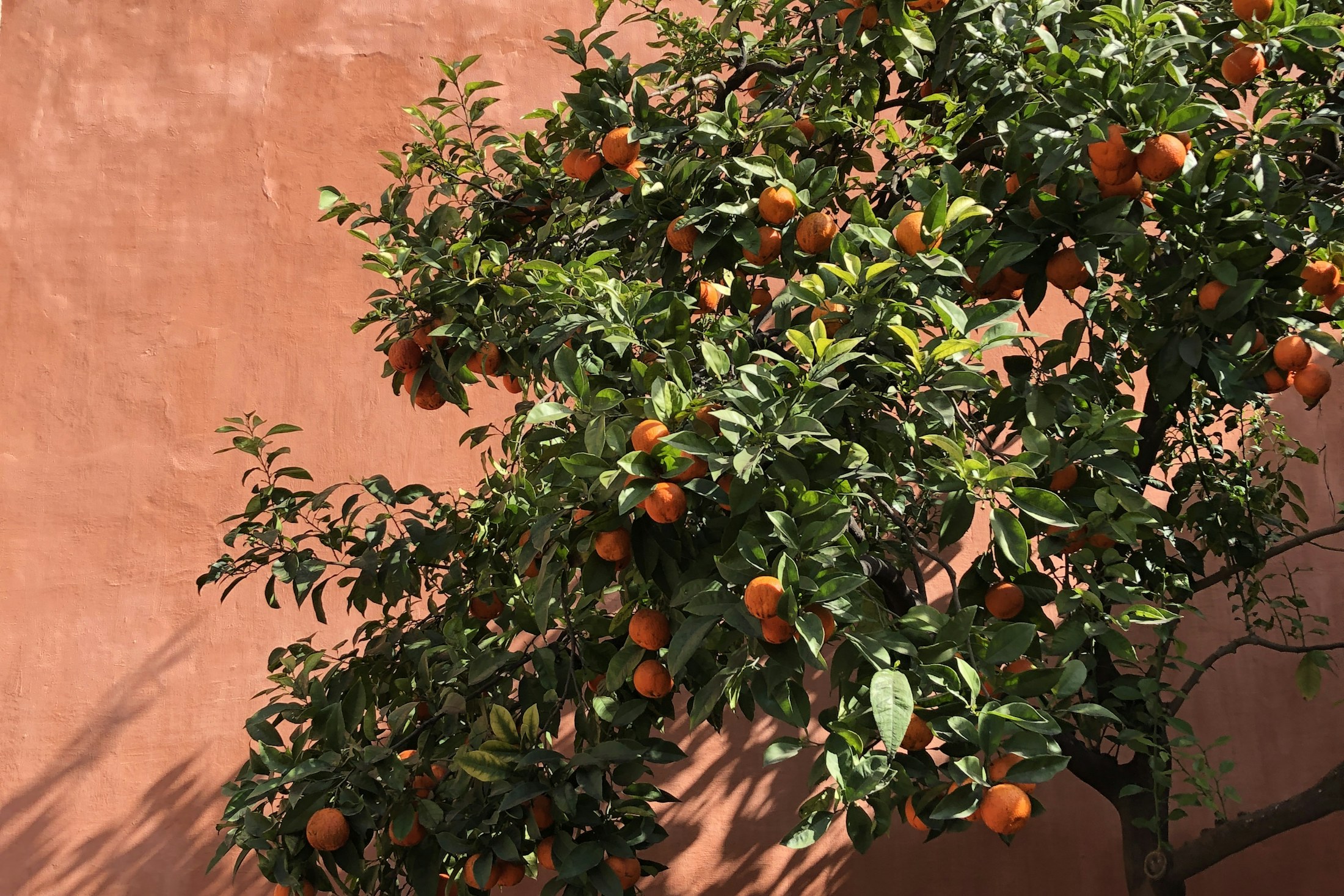
Drzewko pomarańczowe z dojrzałymi owocami na tle ciepłej, ceglastoróżowej ściany w Sewilli
Photo: Mateusz Plinta / Unsplash

4. Furniture and textiles: comfort over an “off-the-shelf set”

Current schemes often feature deep armchairs, modular sofas and loungers instead of hard plastic chairs. In practice, especially in a holiday flat:
  • Frames: teak, acacia, powder-coated aluminium, synthetic rattan – resistant to sun and salt.
  • Textiles: cushions with covers in outdoor fabrics in linen, sand and terracotta tones, with a striped accent. Removable, washable covers are essential if you let the property.
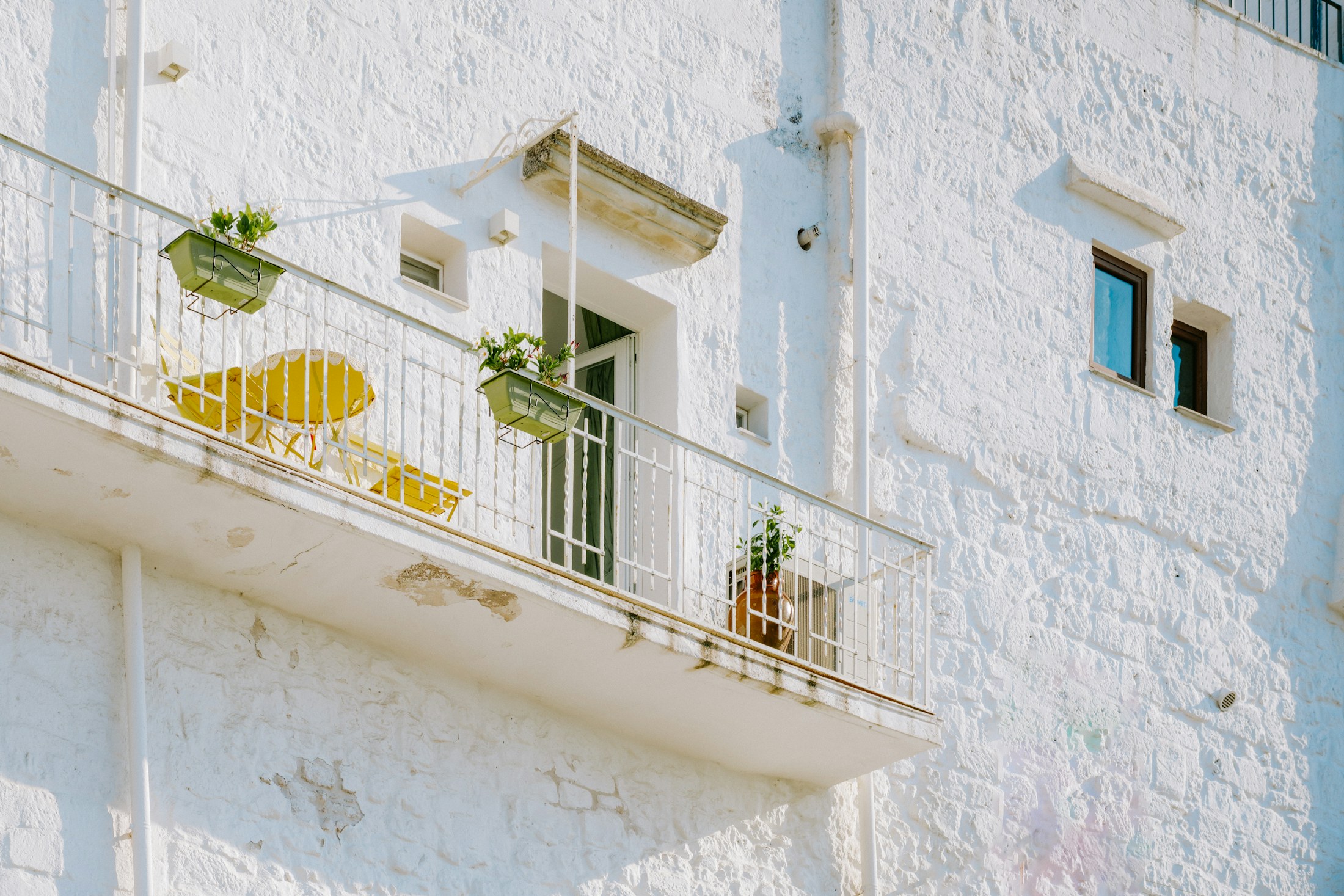
  • A small balcony: a folding bistro table and two chairs, a bench with cushion storage, a table that hangs on the balustrade. One strong colour (such as yellow or olive) is enough.
Biały kamienny balkon z kutą balustradą, żółtymi krzesłami i roślinami w doniczkach
Photo: Denis Gorbuleac / Unsplash

5. Light for long evenings

In Spain, dinner on the terrace often starts after 9 pm, so lighting matters as much as shade. Opt for several low, warm sources: a string of lights, wicker or bamboo lanterns, portable LED lamps (solar or USB-C rechargeable) and candles in glass holders. If you are planning a new socket or wall light outside, have an electrician fit it – the installation must be suitable for outdoor use.
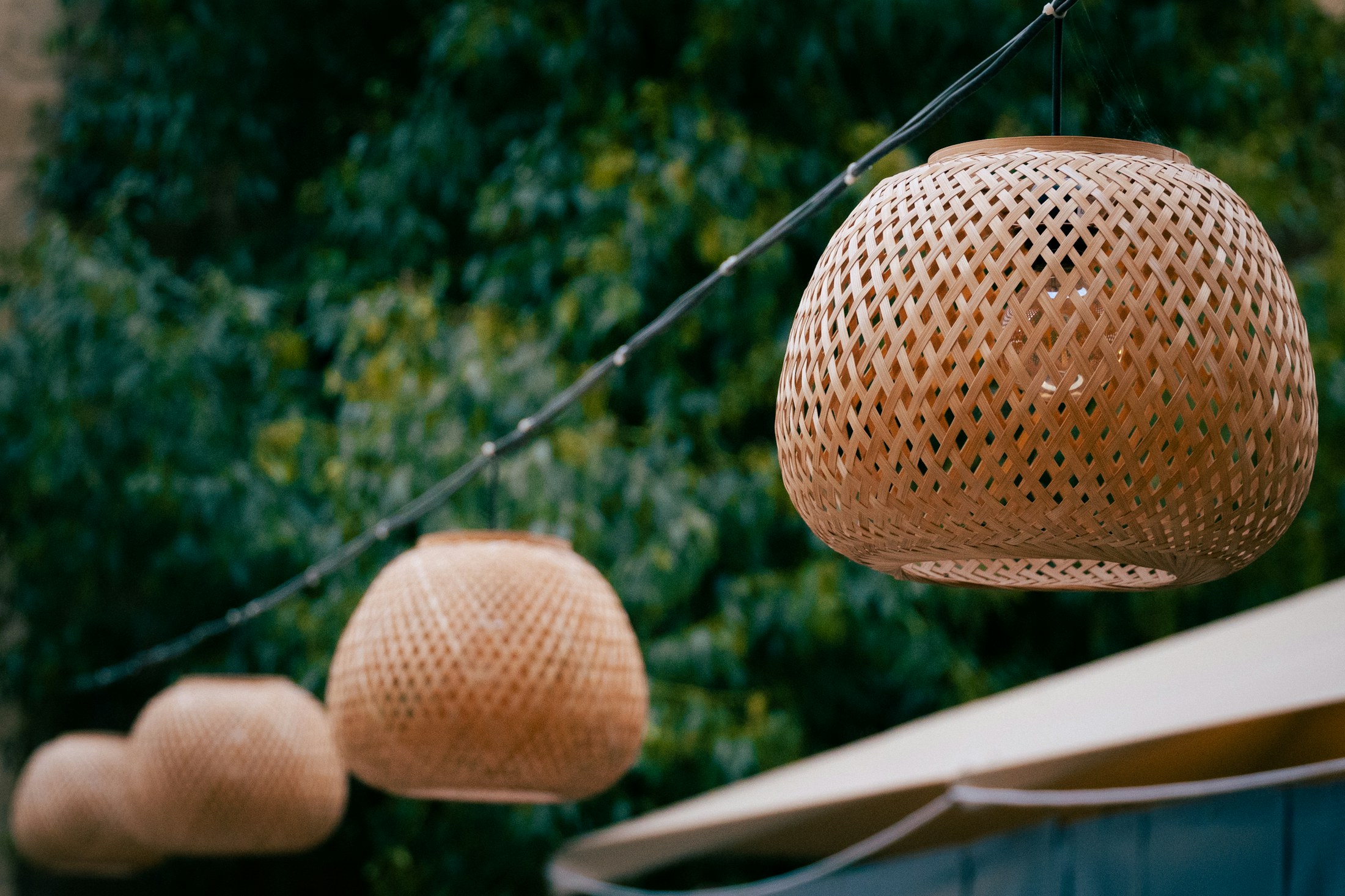
Plecione lampiony zawieszone na girlandzie na tle zieleni
Photo: Christian Agbede / Unsplash

Before you install anything: what the community and the town hall say

This is the part that Polish buyers of flats in Spain often only hear about from a neighbour or the administrator. Not every awning or pergola needs the community’s approval – it depends, among other things, on the type of work, its impact on the façade and common elements, the community’s bylaws and local municipal regulations. In buildings governed by the Spanish Horizontal Property Act (Ley de Propiedad Horizontal, LPH), the starting point is the following principles:

  • Changes within your own flat are generally permitted as long as they don’t compromise the building’s safety, its general structure, its configuración o estado exteriores (external appearance) or the rights of other owners. You must inform the community’s representative of such work in advance. In the rest of the building – that is, outside your own flat – an owner may not alter anything on their own (art. 7.1 LPH).
  • The terrace’s status matters. A terrace may be part of the flat, but it may also be a common element with an exclusive right of use – in which case what you may do there depends on the deed of division (título constitutivo) and the community’s bylaws.
  • Awnings, sails, pergolas, trellises, the colour of walls visible from outside – light, removable solutions often raise no objections, but if they change the look of the façade or need fixing to common elements, the community may have a say. Many communities set a single model and colour for awnings, and some town halls require a notification or a licence, for example for a pergola on a roof terrace, known as an ático.
  • More significant work – enclosing a terrace (cerramiento), altering the structure or the volume of the building – is listed in the Act among works subject to the relevant administrative authorisation and requiring the community’s prior approval by the majority the LPH lays down for each case (art. 10.3 b LPH). In practice, this usually means a resolution at the owners’ meeting and a licence or notification at the town hall.
  • Work carried out without the required approvals may lead to a dispute with the community, including a demand to restore the previous state, and – if a required licence is missing – to proceedings at the town hall.

Before carrying out a permanent enclosure or any work that changes the look of the building, it is worth checking the community’s bylaws and the requirements of the relevant town hall.

A practical checklist before shopping for your terrace

  1. Ask the administrator (administrador de fincas) for the community’s bylaws and any resolutions on the façade, awnings and terraces.
  2. Ask which awning model and colour apply in the building.
  3. For a pergola, an enclosure or new electrical work, check with the town hall (ayuntamiento) whether a licence or notification is required.
  4. If you are still buying the flat – ask about this before signing the contract, especially if the previous owner has already enclosed the terrace.

From Formentera Studio’s experience

The best-working terraces I see in Spanish flats have three things in common: one good source of shade, one truly comfortable seating area and plants that survive without daily care. I treat fashionable accessories – stripes, colourful ceramics, lanterns – as a layer that is easy to change in a year or two. Instead, I invest in what is hard to replace: solid furniture, good pots, sensible irrigation and shading that complies with the community’s rules.

If the terrace is meant for holiday guests, I choose even simpler, more durable solutions: removable covers, furniture without delicate weaves, and lighting with no cables across walkways.

Sources and updates

Information verified on 6 October 2026.

This article is for information and inspiration only. The description of the Ley de Propiedad Horizontal is simplified – what you may do on a particular terrace depends on the community’s bylaws and resolutions, the regulations of the town hall and region, and the legal status of the property. Before carrying out work or buying, consult the community administrator, the town hall or a lawyer. This article is not a substitute for individual legal advice.

Furnishing a terrace or a flat in Spain?

Tell me about your plans — I’ll help you plan the interior and the outdoor space so that they are beautiful, comfortable and compliant with your community’s rules, even remotely.