Instead of a "must-have" list, an orderly overview. First, what the fairs and exhibitions of 2025–2026 actually showed; then the materials that have worked in the Mediterranean climate for generations; and finally – clearly labelled – my own perspective as a designer.
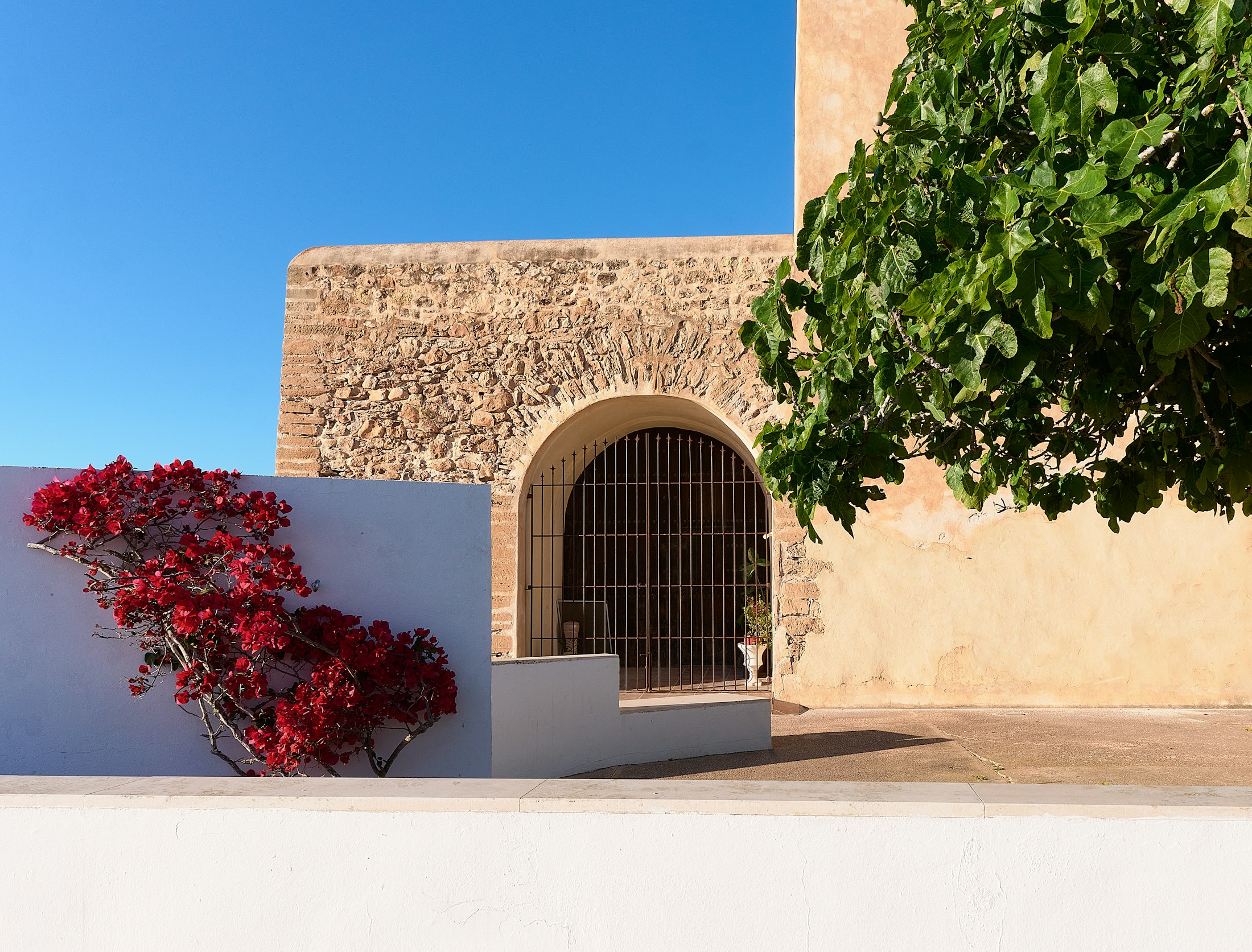
A Mediterranean interior usually starts with a material rather than a piece of furniture: with stone that is cool underfoot, a lime-washed wall, wood finished with oil. So as not to confuse fashion with what lasts, I have divided this piece into three parts: trends confirmed by sources from 2025–2026, timeless materials and sections labelled "From Formentera Studio practice", in which I write about my own choices.
The 61st edition of Casa Decor (9 April – 24 May 2026, in a palace at calle San Agustín 11) featured 47 spaces. Recurring themes in the organiser's materials were fine woods, ceramic and stone surfaces with a pronounced texture, and craftsmanship presented in a contemporary way. In its review of materials from this edition, Casa Decor notes that materials are increasingly used to build and organise space, not just to finish it. This was clearly visible in the dressing room created for the Sanrafael brand, where oak was combined with blues and deep reds, and in the bathroom by the Viteri/Lapeña studio for the Strohm brand with an openwork partition of extruded ceramic.
The organisers of the 64th Salone del Mobile (21–26 April 2026) described mineral and earthy colours and matt finishes. Reports from Milan, including those by Wallpaper*, described a move away from austere minimalism towards richer, more textured interiors.
After Cersaie 2025 , an industry report from the Italian ceramic manufacturers' association pointed to tiles with three-dimensional, grooved surfaces, terracotta shades and travertine-inspired finishes. The spring Ceramics of Italy 2026 report confirms the interest in matt travertine and limestone and a warm earthy palette. The 43rd edition of Cersaie runs from 21 to 25 September 2026; official summaries have not yet been published – I will update this piece once they are.
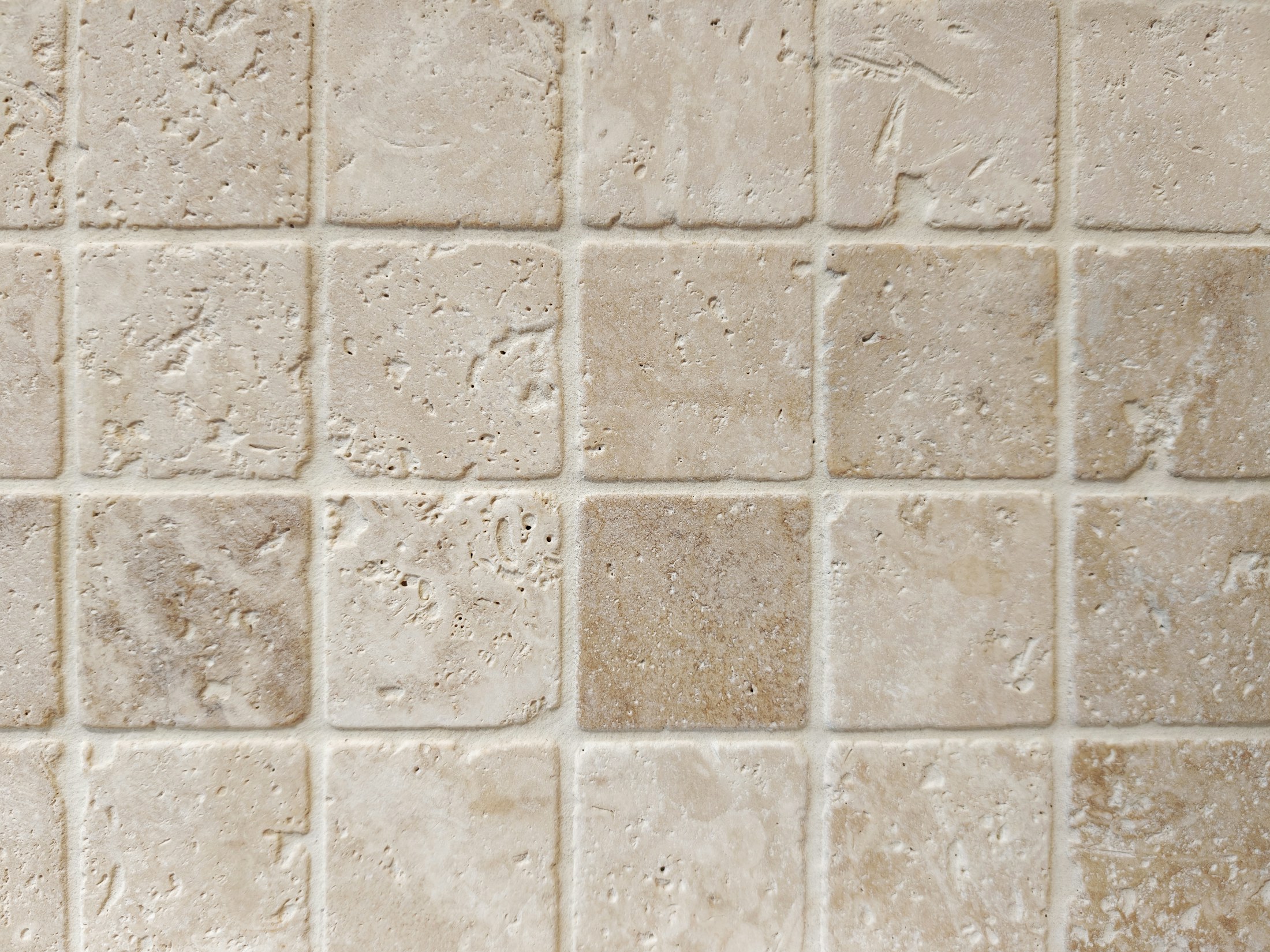
Travertine is a porous limestone rock. It absorbs water and stains, and acids – lemon juice, vinegar, wine, harsh cleaning products – can dull its surface (Natural Stone Institute). Sealing reduces the risk of staining but does not eliminate it, and pH-neutral products are best for cleaning. In practice you choose between a filled version (easier to maintain) and an unfilled, rawer one. A brushed or honed finish hides signs of wear better than a polished one.
In Spain it is also worth looking at local stone. In the Balearics, the traditional building material is marès – a soft, porous limestone (calcarenite) with a warm, sandy tone. Local stone usually works best with the light in which it will be seen.
Large-format porcelain slabs and sintered quartz surfaces can now faithfully reproduce travertine or marble. They are practically non-absorbent, need no sealing and cope well with high temperatures and sunlight – they work well for worktops and terraces. The limitations: in many products the pattern is only on the surface, so a different colour shows on edges and bevels (more expensive through-body versions exist); thin slabs are prone to chipping during fabrication; and repair is harder than with stone, which can be re-honed.
From Formentera Studio practice: I choose not a category but a specific product and an experienced installer – the terms "porcelain" and "sintered stone" are sometimes used interchangeably. I use sintered stone where durability matters (worktop, terrace), and natural stone where touch and patina matter.
Lime plasters and paints (cal) are breathable and matt, help to stabilise humidity, and fresh lime is alkaline, which discourages mould growth (Building Limes Forum, SPAB). Slight variations in tone mean that light falls softly across them.
Tadelakt is a Moroccan technique: pigmented lime compacted with a stone and sealed with olive-oil soap. The surface is water-repellent and resistant to splashes, but not waterproof – manufacturers advise against using it inside a shower enclosure. It needs periodic renewal with soap and acidic detergents should be avoided (Kreidezeit).
Clay plasters buffer humidity well. They work in living spaces and even in a bathroom – away from direct splashes.
Microcement is a different category: it contains polymers, gives a uniform effect and is usually finished with a sealer that reduces breathability.
From Formentera Studio practice: in old stone houses in Spain, often affected by rising damp, I choose lime; I keep microcement for new, dry substrates.
Oak is the most versatile – for floors, joinery and furniture. Olive wood is dense and hard with a striking grain, but it comes in small pieces, so it works for tabletops, boards and details. Chestnut is durable and rich in tannins (The Wood Database); from joinery practice: stainless steel is better for fittings, because the tannins react with iron.
The finish determines the Mediterranean character of wood. Oil or hard wax gives a matt surface, and a scratch can be repaired locally. On the coast it is worth acclimatising timber before installation and remembering that many species lighten or turn grey in full sun.
Hand-formed tiles and pottery bring small variations in size, thickness and glaze that cannot be designed in software. Terracotta floors (barro cocido) are porous and need sealing, but they age beautifully. I cover azulejos and zellige in more depth in a separate Guide article.
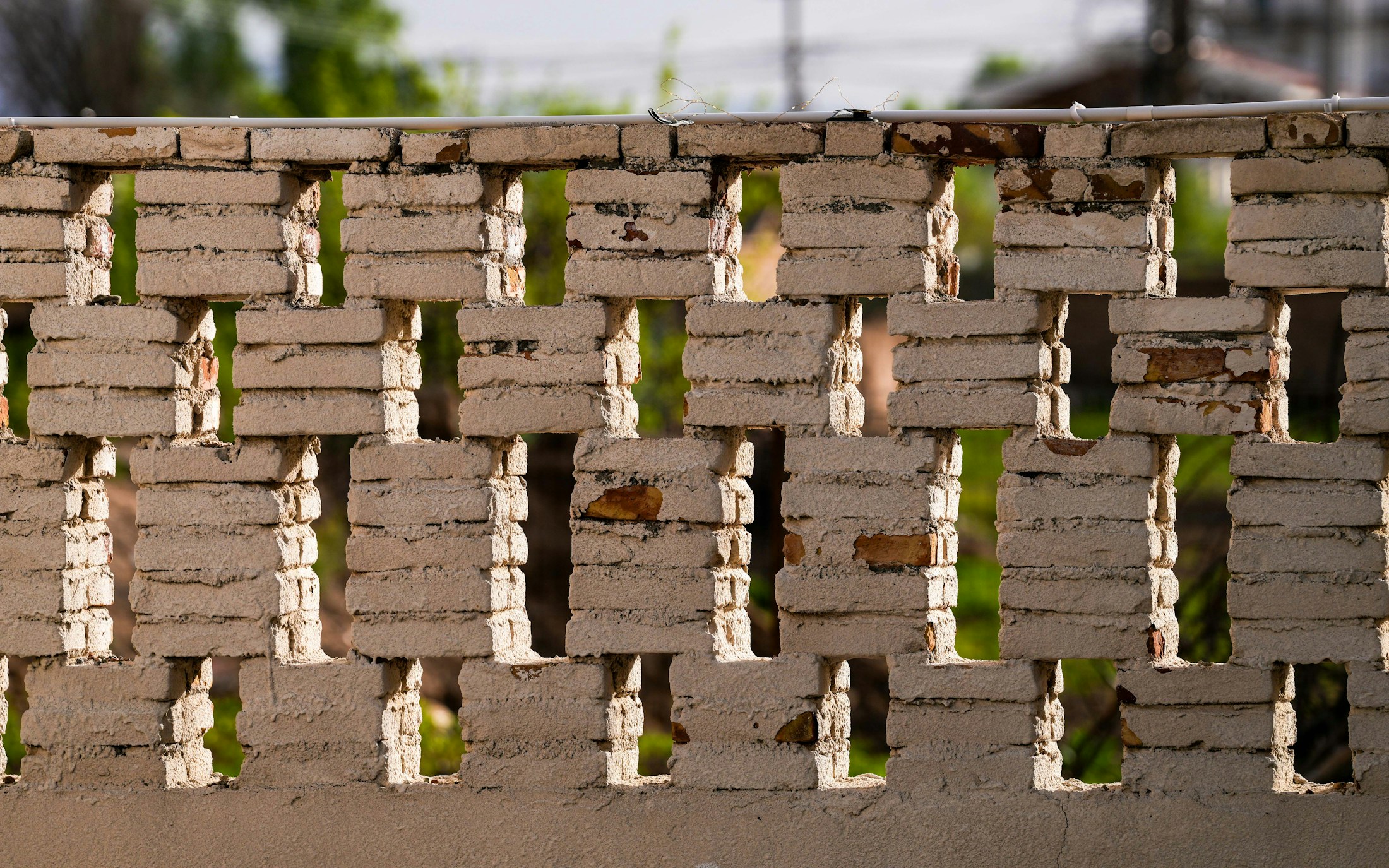
Ceramic celosías – openwork screens of brick or shaped blocks – are one of the most logical details of the Mediterranean climate: they provide shade and airflow while shielding you from the neighbours' view. They became widespread on the Spanish coast in the 1960s and 70s, later gave way to air conditioning, and today they are returning as an element of passive architecture – as noted in July 2026 by Casa Decor. At this year's exhibition, ceramic openwork appeared, among other places, on a terrace designed by Mayice Studio for Nuet Ceramics.
In Spain, a celosía on a terrace or by a patio genuinely reduces heat gain. In Poland it more often works indoors, e.g. as a partition between the kitchen and dining room; outdoors, the frost resistance of the blocks needs checking.
Linen looks best slightly crumpled and lets air through – in curtains, throws and tablecloths. Jute works well for rugs in living areas. The most Spanish of fibres is esparto, a tough grass native to the western Mediterranean basin. The oldest esparto weavings, from the Andalusian Cueva de los Murciélagos and held at the Museo Arqueológico Nacional, were dated in 2023 to around 9,500 years old. Esparto was traditionally woven into baskets, mats, ropes and espadrille soles. At home it is worth choosing pieces by local craftspeople – with one caveat: esparto does not like constant damp.
Ochre, terracotta, sand, brown and off-white come straight from the landscape and the materials, so they do not date along with fashion. In Spain, lime white reflects the harsh light; in Poland the same white can look grey, so it is better to choose a white softened with a touch of ochre.
This is my opinion, not data from reports. I count as seasonal fashion kitchens made entirely of red travertine, metallic laminates, intense "jewel" colours on large surfaces and 3D ceramics on every wall. They can be beautiful, but they quickly date an interior. I consider a lasting direction to be matt mineral walls, stone and terracotta on the floor, oil-finished wood, linen and celosías where they genuinely provide shade. My test is simple: does the material work in the given climate, and will it look better in ten years' time than it does today?
A Mediterranean interior is not a costume but a way of thinking about material, light and time. If you start there, trends become merely an extra.
Information verified: 25 September 2026. We will add the Cersaie 2026 summaries once they are published.
Tell me about your plans – I will be happy to help you find the right direction.