In Spain, a terrace or balcony is often the most-used “room” in the flat: you have breakfast there, work in the shade and spend the evening by lantern light. I show how to furnish it in a Mediterranean spirit in 2026 – and which changes (an awning, a pergola, an enclosure) call for a conversation with the community administrator first.
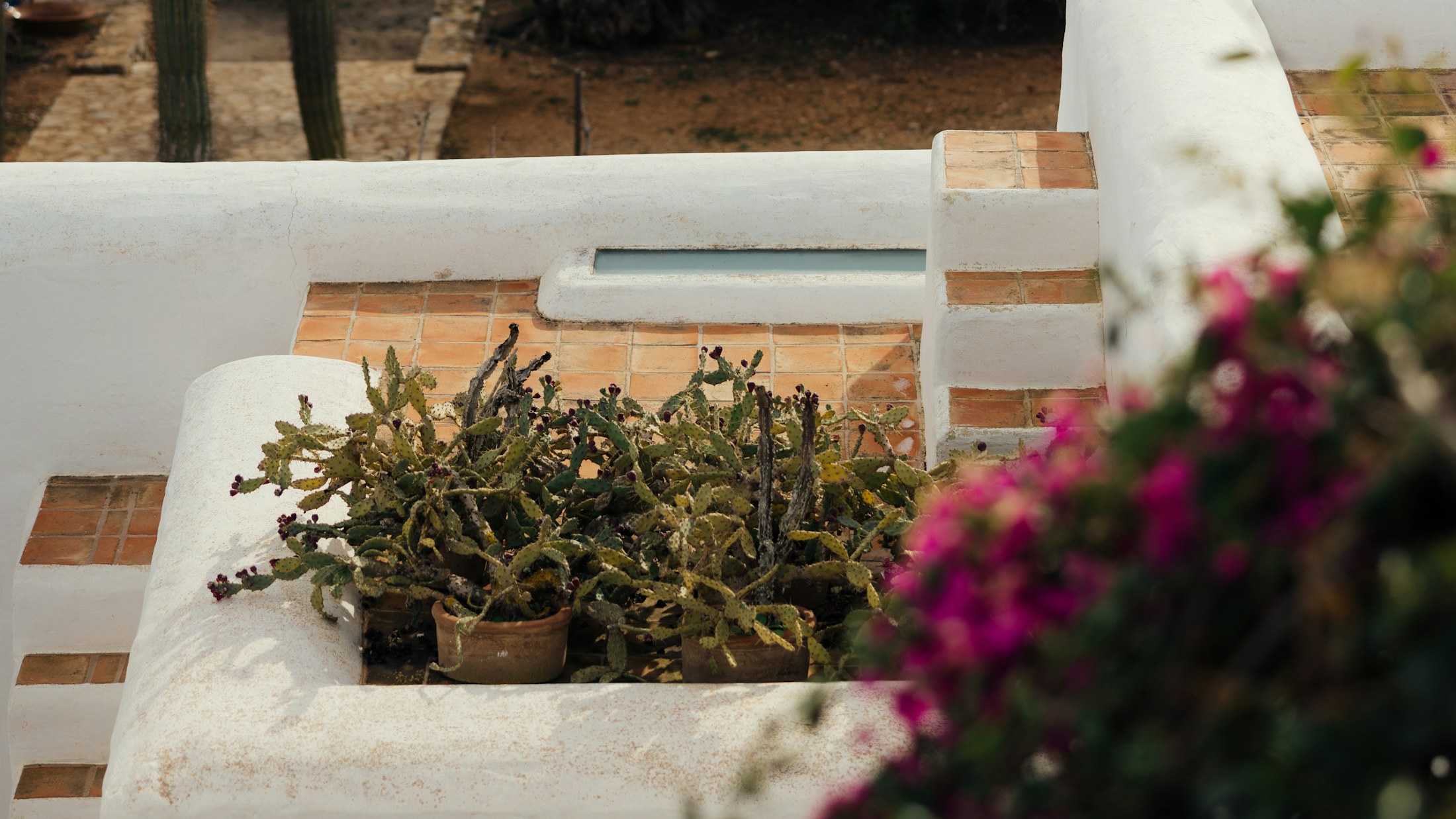
A Mediterranean terrace doesn’t start with a matching set of garden furniture. It starts with three questions: where the shade is, how the wind blows and when you will actually sit out here. Only then do you choose materials, colours and accessories. Below I set out the design directions visible in current terrace schemes and suggest what is worth choosing if this is your holiday flat or a property you let out.
This year’s Spanish and French interiors magazines and furniture brands’ collections keep returning to a few themes. Treat them as current directions and inspiration rather than fixed rules:
In Spain, from May to October the sun decides whether the terrace gets used at all. The options, starting with the simplest:
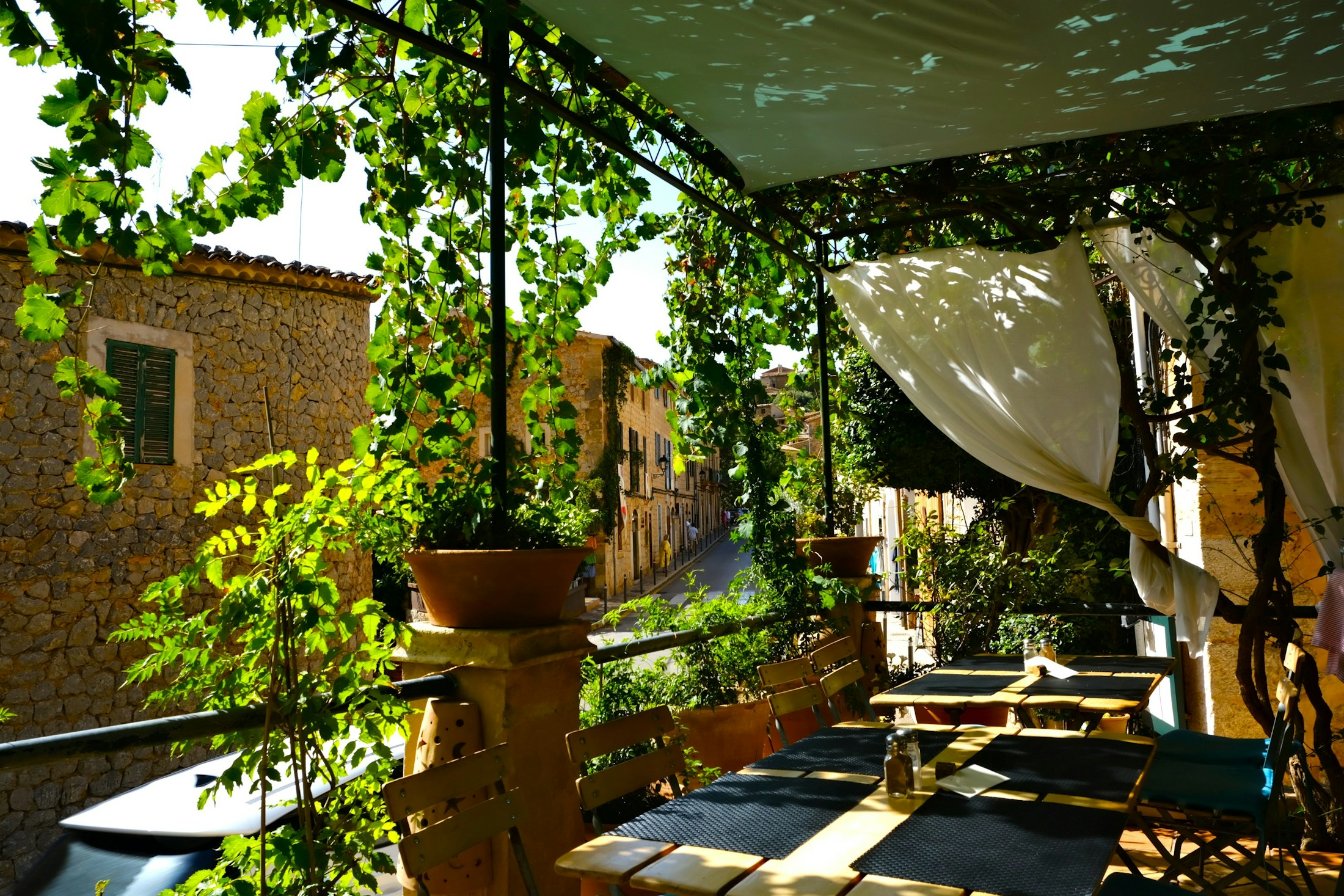
On a terrace, what matters is what is underfoot and behind you. In a rented or newly bought flat you often can’t replace the flooring – but you can “warm it up”:
I have written in more detail about the materials themselves (travertine, terracotta, lime, tadelakt) in the article Mediterranean interiors 2026 – materials and details worth knowing, and about tiles in the piece on azulejos and zellige.
A Mediterranean terrace is green, but not a “jungle”. The best choices are plants that love the sun and tolerate dry spells – which matters when you only visit the flat a few times a year:
In practice: choose large pots in terracotta or lightweight composite and, if you are rarely there, a simple drip irrigation system with a timer. Place heavy pots against the wall rather than at the edge of the balcony, and don’t block the drains with them.

Current schemes often feature deep armchairs, modular sofas and loungers instead of hard plastic chairs. In practice, especially in a holiday flat:
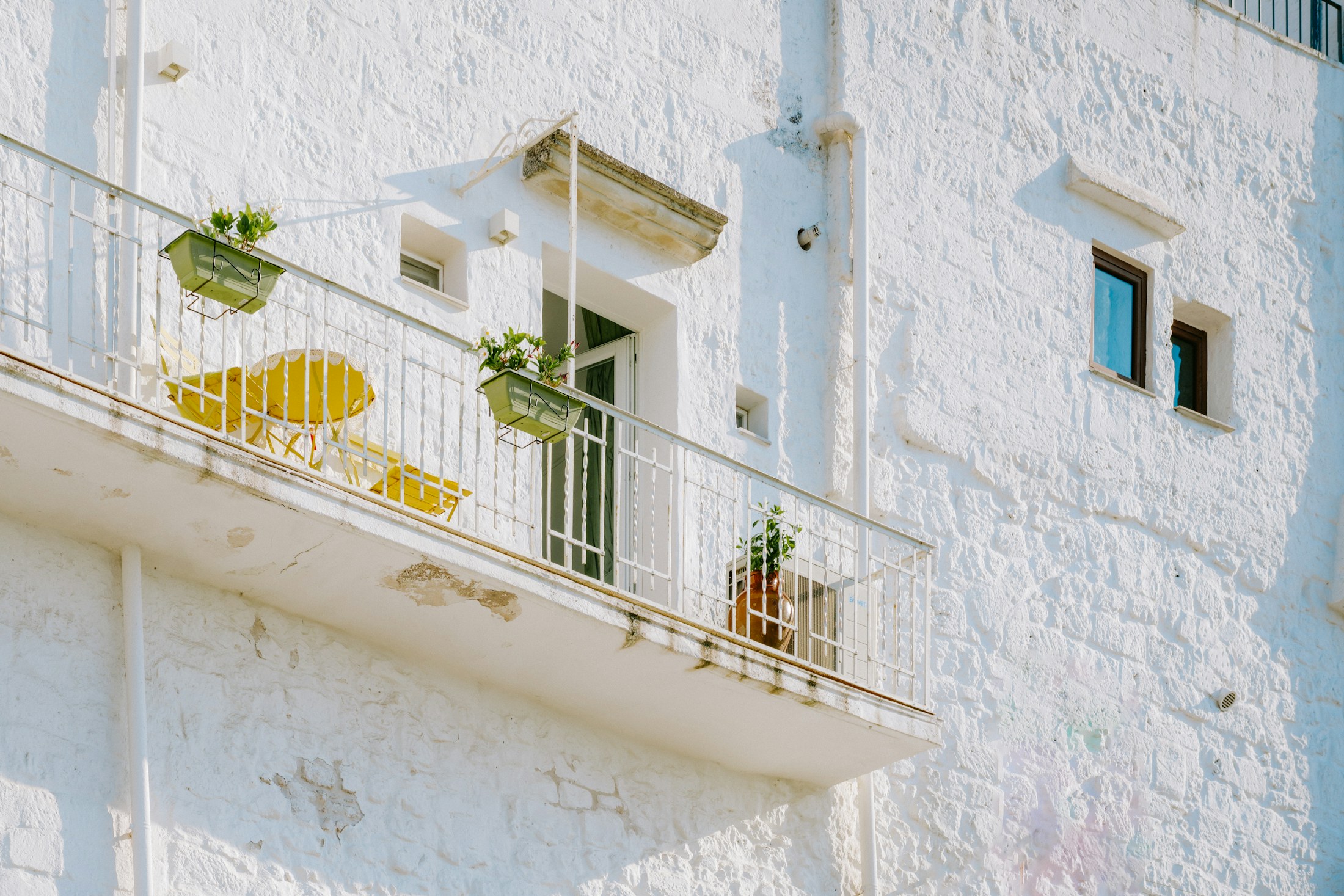
In Spain, dinner on the terrace often starts after 9 pm, so lighting matters as much as shade. Opt for several low, warm sources: a string of lights, wicker or bamboo lanterns, portable LED lamps (solar or USB-C rechargeable) and candles in glass holders. If you are planning a new socket or wall light outside, have an electrician fit it – the installation must be suitable for outdoor use.

This is the part that Polish buyers of flats in Spain often only hear about from a neighbour or the administrator. Not every awning or pergola needs the community’s approval – it depends, among other things, on the type of work, its impact on the façade and common elements, the community’s bylaws and local municipal regulations. In buildings governed by the Spanish Horizontal Property Act (Ley de Propiedad Horizontal, LPH), the starting point is the following principles:
Before carrying out a permanent enclosure or any work that changes the look of the building, it is worth checking the community’s bylaws and the requirements of the relevant town hall.
The best-working terraces I see in Spanish flats have three things in common: one good source of shade, one truly comfortable seating area and plants that survive without daily care. I treat fashionable accessories – stripes, colourful ceramics, lanterns – as a layer that is easy to change in a year or two. Instead, I invest in what is hard to replace: solid furniture, good pots, sensible irrigation and shading that complies with the community’s rules.
If the terrace is meant for holiday guests, I choose even simpler, more durable solutions: removable covers, furniture without delicate weaves, and lighting with no cables across walkways.
Information verified on 6 October 2026.
This article is for information and inspiration only. The description of the Ley de Propiedad Horizontal is simplified – what you may do on a particular terrace depends on the community’s bylaws and resolutions, the regulations of the town hall and region, and the legal status of the property. Before carrying out work or buying, consult the community administrator, the town hall or a lawyer. This article is not a substitute for individual legal advice.
Tell me about your plans — I’ll help you plan the interior and the outdoor space so that they are beautiful, comfortable and compliant with your community’s rules, even remotely.