Spain's most international coast: sunshine for most of the year, an airport with connections across Europe, golf courses, international schools and Málaga, which has gone from a transit port to one of the country's most interesting cities.
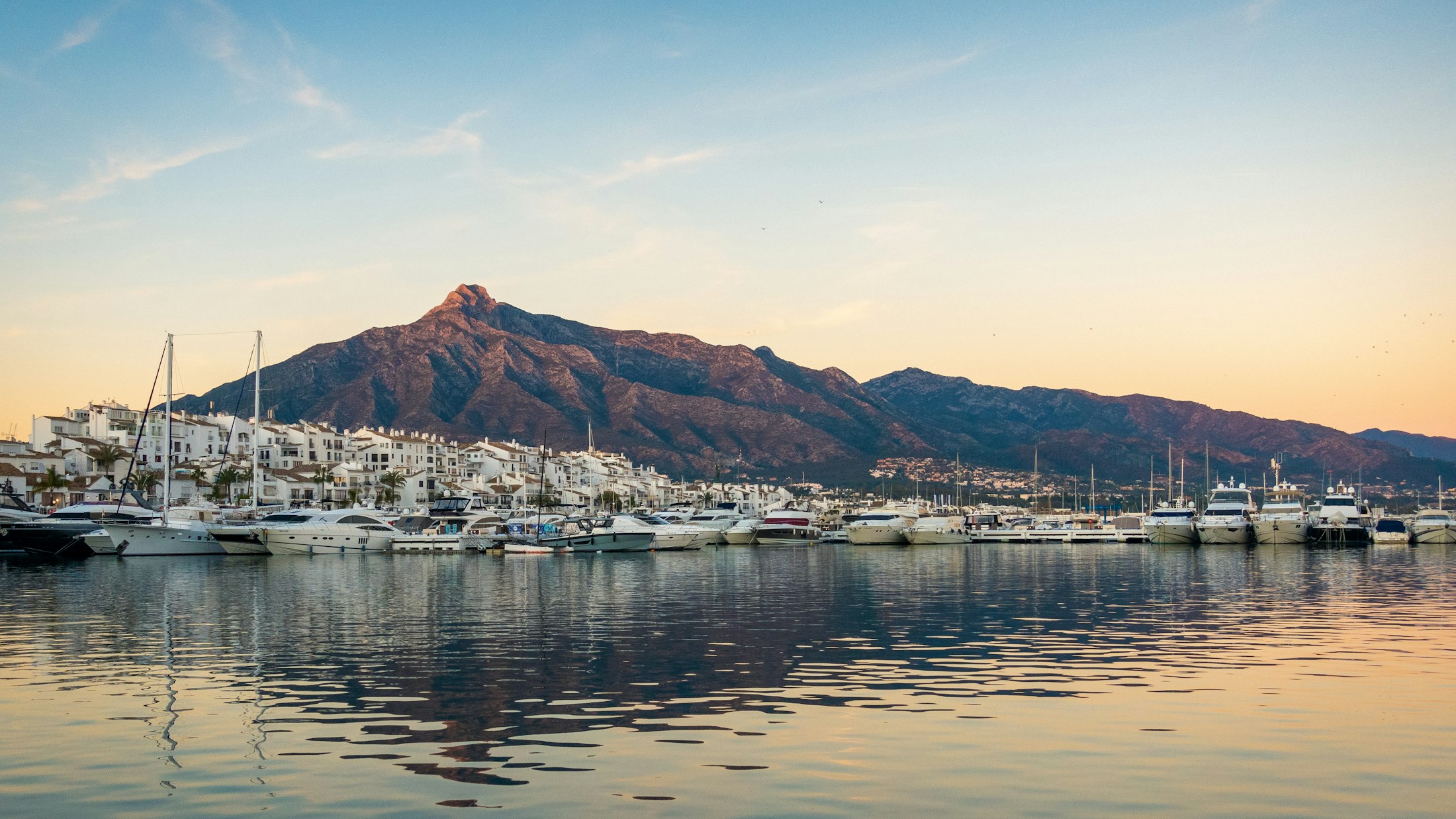
The Costa del Sol is Spain's most "ready-made" region for people from abroad – with infrastructure, schools and services in many languages. It is worth considering if:
An authentic, calm Andalusia without crowds and dense development is, however, easier to find on the Costa Tropical or the Costa de la Luz.
The Costa del Sol is the coast of the province of Málaga, from Nerja in the east to Manilva in the west. Mountains – the Sierra de las Nieves, the Sierra Blanca and the Montes de Málaga – shelter it from the north, while towns and resorts of very different character stretch along the sea.
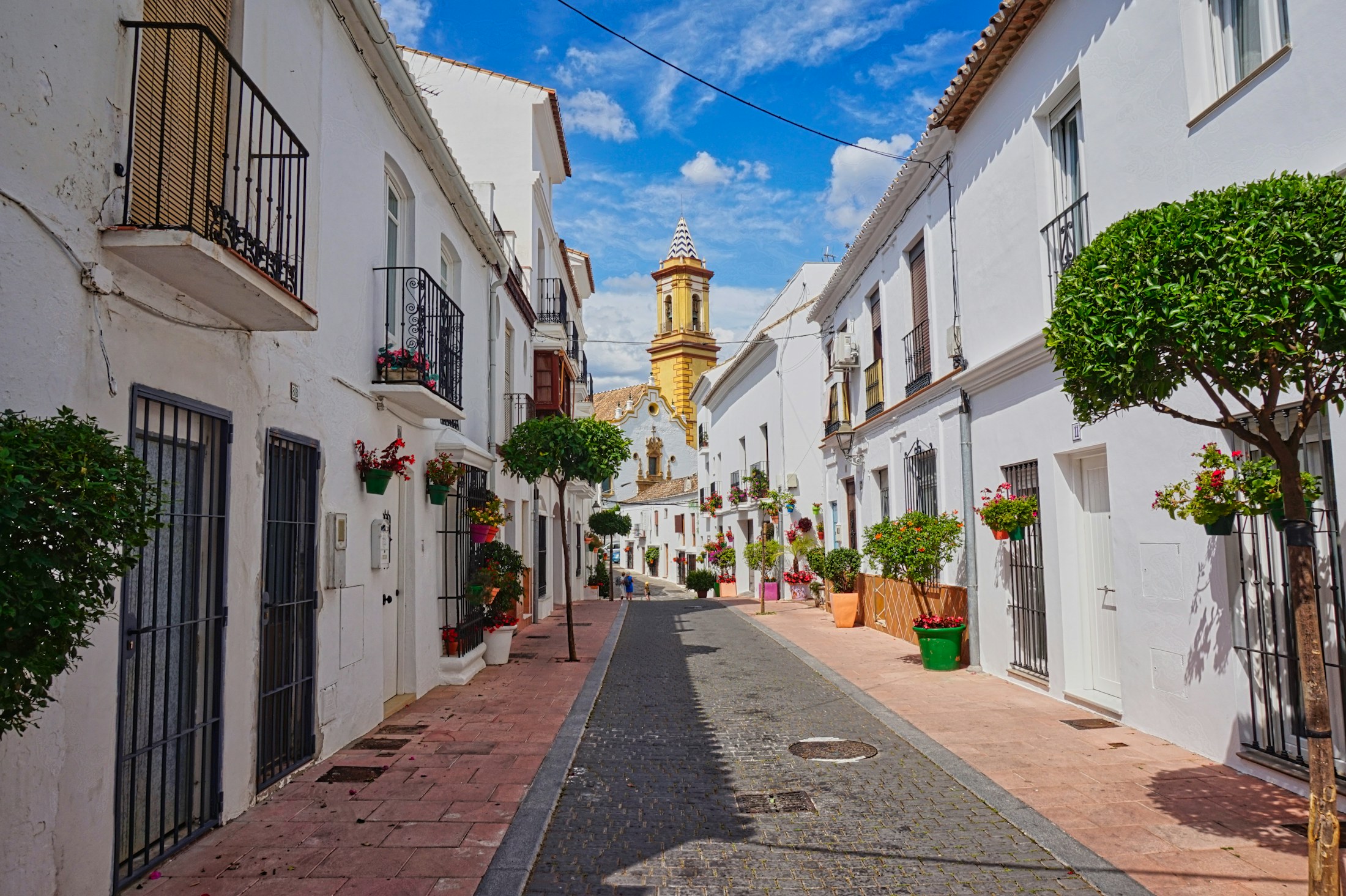
Today Málaga is a lively city of culture, with the Picasso Museum, the Centre Pompidou, a revitalised port, a growing tech sector and beaches within the city limits. To the west lie Torremolinos, Benalmádena and Fuengirola – densely built, practical towns that function all year round. Further on, Mijas pairs a white hillside village with seaside La Cala, and Marbella combines a historic centre with the luxurious Golden Mile, Nueva Andalucía and Puerto Banús. Estepona charms with its flower-filled lanes and new promenade, Benahavís with its mountain setting and gated villa estates, and Casares and Manilva with the quieter western end of the coast. In the east, Nerja and Frigiliana offer cliffs, coves and white villages.
The lifestyle is international: golf, beaches, restaurants, beach clubs and schools, alongside Andalusian culture – Semana Santa, ferias, tapas and a paseo at sunset. The foreign community is huge and diverse, which makes settling in easier, but also means that in some places you are more likely to hear English than Spanish.
According to AEMET climate normals (1981–2010) for the Málaga Airport station, the average temperature is around 12.1°C in January (average maximum around 16.8°C) and around 26°C in August (average maximum around 30.8°C). Annual sunshine totals around 2,905 hours, with around 534 mm of rainfall, mostly in winter.
Winters are mild and sunny, although spells of rain between November and March can be heavy. Summers are hot, and a few times a year the terral arrives – a dry, hot wind from the mountains that can send temperatures in Málaga soaring. The western part of the coast (Marbella, Estepona) is usually slightly milder thanks to its proximity to the Strait of Gibraltar.
The mild winter months are one of the reasons why so many northern Europeans spend several months a year here. The beach season is long, and life in most towns does not shut down after the summer.
A city with full infrastructure, culture and beaches. The centre and Soho for lovers of city life; Limonar and Pedregalejo, quieter seaside districts to the east; Teatinos, newer development by the university. For those who want to live in the city all year round.
A prestigious location with several faces: the historic centre, the luxurious Golden Mile, golfing Nueva Andalucía, lively Puerto Banús and family-friendly San Pedro de Alcántara. Villas, premium apartments and a very wide range of services.
A restored, flower-filled centre, a long promenade and plenty of new developments. Quieter and often more affordable than Marbella, with a growing international community.
A mountain village known for its restaurants and exclusive villa estates such as La Zagaleta, with sea views. For those seeking privacy – at the cost of relying on a car.
A white hillside village, seaside La Cala with its wide beach, and developments beside golf courses. Family-friendly, with views and easy access to the airport.
Year-round, densely built towns with promenades, a commuter train to Málaga and the airport, and full infrastructure. A practical, often more affordable choice for living without a car.
Cliffs, coves and the Balcón de Europa on the eastern part of the coast, with one of Andalusia's most beautiful white villages right next door. Less international and more intimate.
An exclusive estate with a marina, golf courses and polo clubs – formally in the province of Cádiz, but naturally associated with the western Costa del Sol. For those seeking understated luxury.
Limitations worth knowing about:
Year-round living is one of the region's strengths – Málaga, Fuengirola, Marbella, Estepona and Mijas are in full swing all year round, and international schools make moving with children easier.
A second home works very well thanks to the airport and the climate – many people fly in for the winter months, long weekends and holidays. An apartment by a golf course or with sea views in Estepona, Mijas or Marbella is the classic choice.
As an investment the region has a longer season than most of Spain, but holiday lets are increasingly tightly regulated. In Andalusia they must be entered in the register, and since 2024 municipalities have been able to limit new holiday flats (Decreto 31/2024). On 23 August 2025 the City of Málaga suspended the creation of new viviendas de uso turístico across the whole municipality – for a maximum of three years or until the urban plan (PGOU) is amended. The community of owners also has a say: since April 2025, a new holiday let in a block requires the consent of three-fifths of the owners (Ley Orgánica 1/2025). Check the rules for the specific location before you buy. We do not provide profit forecasts.
The character of the market. This is Spain's most international and most liquid holiday-home market, with a large share of new-build developments (obra nueva) and a luxury segment on a European level. Prices vary greatly between towns, and even between developments within the same municipality. Many listings are aimed directly at overseas buyers, so it is worth comparing them against local data.
This information is general in nature and does not constitute legal or tax advice. Before buying, it is advisable to consult an independent lawyer and tax adviser.
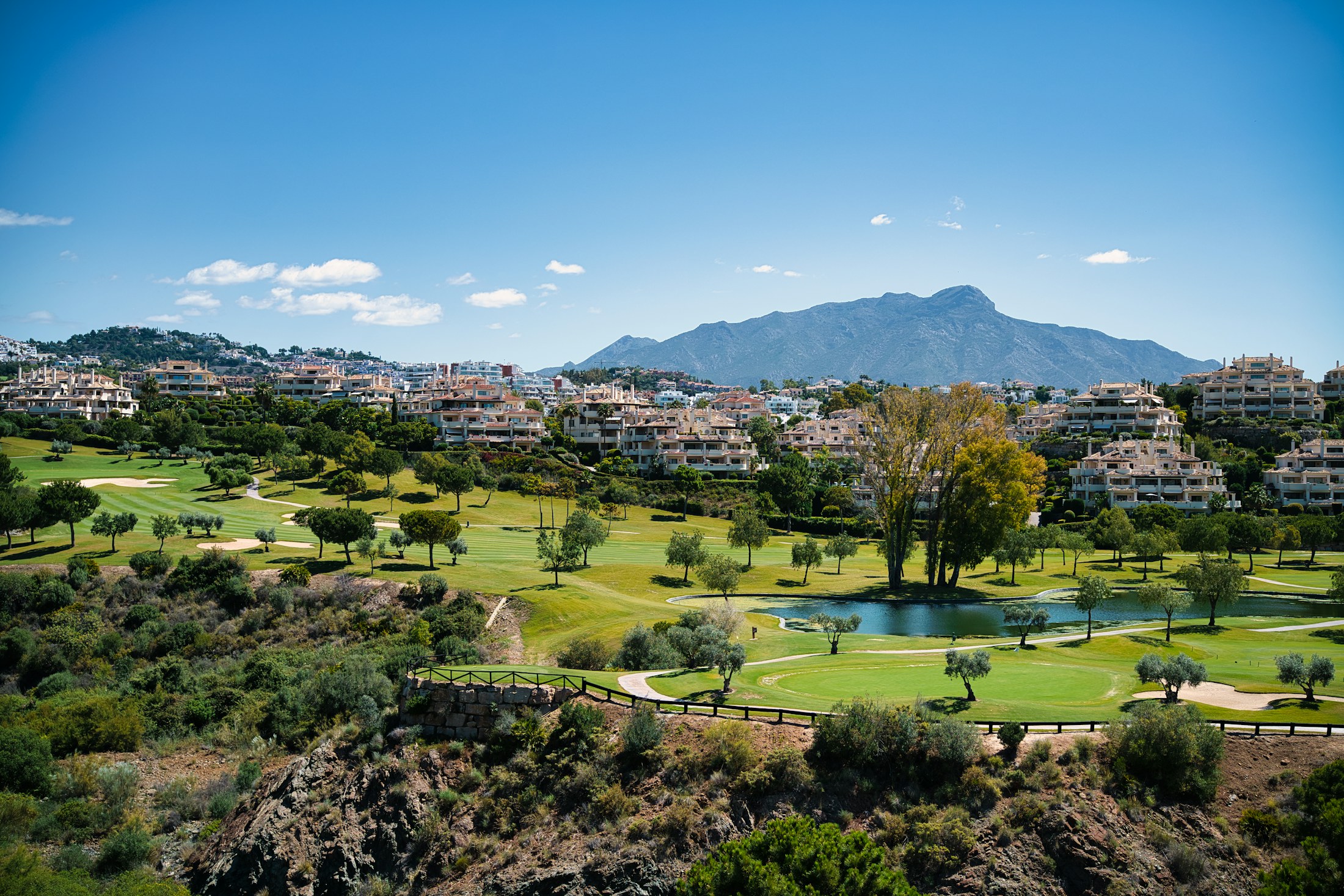
Two worlds coexist on the Costa del Sol: traditional Andalusia, with white houses, patios, wrought-iron grilles and terracotta, and contemporary villas with large expanses of glass, infinity pools and terraces open to the sea. Between them lies the "Andalusian villa" style of the 1970s to 90s – with arches, clay roof tiles and heavy wooden details – which is often modernised today.
Interiors suit an understated Mediterranean luxury: pale stone, travertine, natural wood, linen and rattan, plants, plenty of light and a seamless flow into the garden. Less glitz, more quality in the materials. When renovating an older villa, the biggest change usually comes from brightening the interiors, enlarging the glazing on the terrace side and simplifying the details.
The Costa del Sol offers sunshine, convenience and an international lifestyle – with excellent transport links and full infrastructure. It works both as a second home and as a place to live all year round, provided the paperwork is carefully checked and you take a realistic approach to letting. If you are looking for peace and authenticity, consider the Costa Tropical or the Costa de la Luz.
Sources: AEMET – climate normals for Málaga Airport (1981–2010) · Aena – Málaga-Costa del Sol Airport · Junta de Andalucía – tourism register · BOJA – Decreto 31/2024 (holiday flats in Andalusia) · Ayuntamiento de Málaga – announcement on the suspension of new holiday flats (22.08.2025) · BOE – Ley Orgánica 1/2025 (amendment to the Ley de Propiedad Horizontal) · BOE – Real Decreto 1312/2024 (short-term rental register). Information as of September 2026.
Tell me about your plans. I will help you choose the right location and find a property that suits your lifestyle.